
XCMG XE370CA 800305455 Track Lower Roller Assy / Heavy duty excavator chassis components manufacturer and factory / CQCTRACK / OEM Quality ODM Price


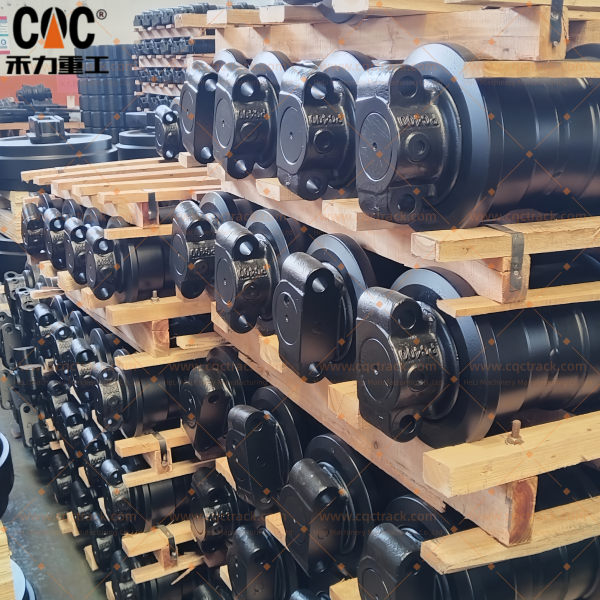
Technical White Paper
XCMG XE370CA 800305455 /800345727 Track Lower Roller Assy: Heavy-Duty Crawler Excavator Chassis Components — Manufacturer & Factory Direct (CQCTRACK / OEM Quality, ODM Price)
1. Executive Summary: Redefining the Undercarriage Standard
Within the medium-to-large hydraulic excavator segment, the 36–37 metric ton class occupies a uniquely demanding operational envelope. Machines in this weight category are deployed across earthmoving projects, mining support operations, quarry loading, heavy infrastructure development, and foundation excavation—environments where undercarriage integrity directly determines machine availability and, ultimately, project profitability. The XCMG XE370CA stands as a flagship model in this class, and its Track Lower Roller Assembly (OEM Part Number 800305455) serves as a critical load-bearing interface between the machine‘s substantial mass and the ground beneath it.
This document provides a comprehensive technical exposition of the XCMG XE370CA 800305455 /800345727 Track Lower Roller Assembly as manufactured by CQC TRACK (Heli Machinery Manufacturing Co., Ltd.) . Designed as a sealed, lubricated-for-life heavy-duty bottom roller, this assembly supports the machine‘s operating weight, distributes dynamic loads through the track chain, maintains precise track alignment during straight-line travel and turning maneuvers, and absorbs the relentless impact shocks that characterize harsh construction and mining environments.
What fundamentally distinguishes this product is not merely dimensional accuracy—it is the engineering rigor that governs every stage of its production lifecycle. Manufactured within an ISO 9001:2015 certified facility and complying with China Quality Certification (CQC) protocols, each roller assembly emerges from a production system that enforces metallurgical integrity, machining precision, heat treatment uniformity, and seal integrity verification throughout the manufacturing process. The supplier, CQC TRACK, functions as a direct-source manufacturer, eliminating the multiple intermediaries that typically inflate costs and degrade supply chain transparency.
This white paper is structured for procurement professionals, fleet maintenance engineers, and equipment dealers. It moves from host machine platform analysis and part number identification, then proceeds through exhaustive engineering deconstruction, material science specifications, quality assurance frameworks, and concludes with the supply chain advantages inherent in the OEM Quality / ODM Price manufacturing model.
2. The XCMG XE370CA Host Machine: Technical Platform Overview
2.1 Machine Classification and Operational Profile
The XCMG XE370CA is a hydraulic crawler excavator operating in the 36–37 metric ton class—a machine that has become widely recognized as one of the most popular 40-ton-class excavators to emerge from the Chinese heavy machinery sector. It is engineered for the intersection of power, durability, and fuel efficiency, making it particularly well-suited for earthwork engineering, mining operations, tunnel construction, municipal infrastructure, highway and bridge building, port construction, and other demanding applications.
The machine incorporates a seamlessly integrated hydraulic system that ensures optimal performance in high-efficiency and heavy-duty operations. Key structural components are manufactured from imported high-strength and wear-resistant steel, enhancing the machine‘s adaptability to harsh working conditions.
2.2 Powertrain and Hydraulic System Specifications
The XE370CA is powered by the ISUZU AA-6HK1XQP diesel engine, a six-cylinder, direct-injection, four-stroke, water-cooled, turbocharged powerplant with air-to-air intercooling. Key engine parameters include:
| Parameter | Specification |
|---|---|
| Rated Power | 190.5 kW @ 2,000 rpm |
| Maximum Torque | 872.8 N·m @ 1,700 rpm |
| Displacement | 7.79 L |
| Cylinders | 6 |
| Fuel Tank Capacity | 630 L |
The hydraulic system features dual piston-type main pumps with a combined flow rate of 2 × 320 L/min—a substantial flow capacity that enables simultaneous, high-speed actuation of digging, swinging, and traveling functions. Main safety valve pressures are set at 31.5 MPa / 34.3 MPa, with the travel system operating at 34.3 MPa and the swing system at 27.5 MPa. The pilot system maintains pressure at 3.9 MPa.
2.3 Machine Weight and Undercarriage Loading Context
The XE370CA‘s operating weight is documented across multiple sources with slight variations reflecting configuration differences. The primary specification is 36,600 kg (approximately 80,689 lb), though certain regional variants are listed at 38,500 kg when equipped with additional counterweights or larger buckets. Bucket capacity ranges from 1.4 to 1.8 m³ standard, with a 2.3 m³ option available in specific configurations.
From an undercarriage engineering perspective, the relationship between machine weight and ground contact area yields a ground pressure of 66.6 kPa—a figure that defines the loading per unit area that the entire undercarriage system must accommodate. The machine achieves a gradeability of ≥35 degrees, capable of traversing slopes that impose significant lateral thrust forces on the bottom roller flanges.
Maximum tractive force is rated at 285 kN, while bucket digging force reaches 242–263 kN depending on configuration and measurement methodology. These forces generate substantial dynamic loads that are transmitted through the track chain to the bottom rollers, particularly during aggressive digging cycles and counter-rotation turning maneuvers.
2.4 Undercarriage Dimensions
The undercarriage dimensions of the XE370CA define the spatial envelope within which the track lower roller assembly must operate. Critical parameters include:
| Parameter | Value (mm) |
|---|---|
| Overall Track Length | 5,035 |
| Wheel Base (Track on Ground) | 4,040 |
| Track Gauge | 2,590 |
| Track Shoe Width | 600 |
| Overall Chassis Width | 3,190 |
| Minimum Ground Clearance | 500 |
The 4,040 mm wheel base—the distance between the front idler centerline and the rear sprocket centerline—dictates the spacing between bottom rollers along the undercarriage frame. The 2,590 mm track gauge determines the lateral separation between the left and right track assemblies, which in conjunction with the machine‘s center of gravity defines the roll stability envelope and the side-loading that each bottom roller flange must resist.
The 600 mm track shoe width provides a substantial contact area that reduces ground pressure but correspondingly increases the lateral leverage applied to bottom roller flanges when the machine traverses side slopes or performs counter-rotation turns. The relationship between these dimensional parameters and bottom roller design expectations will be explored further in the engineering deconstruction section.
3. Product Identification and Cross-Reference
3.1 Primary OEM Part Number
The component at the center of this technical document is the XCMG 800305455 800345727 / Track Lower Roller Assembly. This part number corresponds to the complete track lower roller—also referred to interchangeably in industry terminology as the bottom roller, track roller assy, lower carrier roller, or chassis support roller—as originally engineered for the XCMG XE370CA hydraulic excavator.
The 800305455 part number is the official OEM designation. This number should be referenced in all procurement documentation, maintenance records, and parts catalogs to ensure accurate cross-referencing. The assembly is designed for direct 1:1 mechanical interchangeability with the original component, requiring no field modification to the track frame mounting bosses, shaft alignment bores, or fastener locations.
3.2 Undercarriage System Context
The XCMG XE370CA‘s undercarriage is cataloged under the Undercarriage Assy (312600163) as an assembly group within the official XCMG parts documentation. Within this assembly group, the Track Chain (800305454) works in concert with the track lower rollers to comprise the complete track propulsion system. The 800305455 lower roller assembly is thus a component within this larger undercarriage ecosystem, interfacing directly with the 800305454 track chain and the track frame saddle mounts.
3.3 Supplier Brand and Certifications
The supplier for this assembly is CQC TRACK (Heli Machinery Manufacturing Co., Ltd.) , a manufacturer established in Quanzhou, China, with its principal business encompassing excavator and bulldozer undercarriage parts, including track rollers, carrier rollers, sprockets, idlers, track chain assemblies, and track shoes. The manufacturing facility holds ISO 9001:2015 certification and operates under CQC product certification, providing dual-layer quality assurance that many aftermarket suppliers do not maintain.
The supplier‘s brand identity—CQCTRACK—is positioned in the global construction machinery parts market as a source of OEM-quality undercarriage components. Through direct factory sourcing, the supplier eliminates multiple tiers of distribution, enabling both OEM quality standards and ODM pricing structures that improve total cost of ownership for fleet operators.
4. Engineering Deconstruction: Anatomy of the 800305455 Lower Roller Assembly
The track lower roller assembly is a precision-engineered composite unit comprising multiple interacting subsystems. Each subsystem‘s material selection, manufacturing methodology, and dimensional tolerances must work in concert to achieve the performance expectations of the 36.6-ton host machine. The following sections provide an exhaustive analysis of each component‘s function within the assembly.
4.1 Roller Shell and Flange System
Function: The roller shell constitutes the primary contact surface with the track chain bushings and, through those bushings, with the ground. It rotates around the stationary shaft as the machine travels, and its outer tread surface undergoes continuous sliding and rolling contact with abrasive materials.
Material Selection: The roller shell is precision-forged from a customized micro-alloyed boron steel, typically within the 40MnB or 50Mn grade families. Boron additions improve hardenability, enabling the material to achieve through-hardened section thicknesses even in the heavy cross-sections characteristic of a 36–37 ton class bottom roller. Forging—rather than casting—aligns the metal‘s grain flow along the component‘s principal stress axes, delivering directional strength that cast equivalents cannot achieve and offering superior resistance to impact shock and fatigue crack propagation.
Flange Configuration: The roller shell incorporates integral double flanges—a design choice that reflects the lateral loading demands of the XE370CA operating envelope. These flanges are precision-machined to specific heights and thicknesses engineered to maintain contact guidance with the track chain‘s inner link groups. The double-flange design prevents the track chain from slipping laterally off the roller during excavator turning operations, side-slope traversals, or uneven ground articulation.
In the context of the XE370CA, with its 2,590 mm track gauge and 66.6 kPa ground pressure, the lateral forces generated during counter-rotation turning can be substantial. The double-flange configuration is specifically intended to provide positive lateral constraint that prevents derailment events, which can cause extensive damage to sprockets, idlers, and track frames, as well as creating significant safety hazards on active job sites.
Manufacturing Integrity: The forging process ensures that the flange-to-shell transition zone maintains uniform wall thickness without stress concentration risers that could serve as crack initiation sites under cyclic loading. After forging and rough machining, the shell undergoes multiple heat treatment stages—detailed in Section 5—to achieve the required combination of surface hardness and core toughness.
4.2 Central Shaft
Function: The shaft acts as the stationary structural core of the entire assembly. It does not rotate during operation; instead, the roller shell rotates around the shaft via intervening bearing bushings. The shaft distributes load forces evenly along its length and provides the mounting interfaces that secure the roller assembly to the track frame.
Material Selection: The shaft is machined from quenched-and-tempered alloy steel, typically within the 42CrMo class. This chromium-molybdenum alloy offers an optimized balance of tensile strength, fatigue resistance, and toughness—properties essential for a component that must withstand both high static loads and repetitive impact cycles without deforming or fracturing.
Surface Finish Requirements: The shaft journals are precision-ground to fine surface finishes measured in Ra micrometer ranges. This surface quality is not merely cosmetic; it directly reduces frictional coefficients at the bearing contact interfaces and ensures consistent lubricant film development under load. A rough shaft surface will abrade the bearing bushing, generating wear debris that contaminates the lubricant and accelerates seal degradation.
Mounting Configuration: The shaft ends feature mounting flats or pin bores that secure the roller assembly to the track frame saddle mounts using hardened retaining pins. These mounting interfaces provide positive axial location and prevent rotation of the shaft relative to the track frame, ensuring that all relative motion occurs at the roller shell–bushing–shaft interface.
4.3 Bearing Bushing System
Function: The bearing bushing is the critical interface between the rotating roller shell and the stationary shaft. It must accommodate rotational motion while transmitting high radial loads from the shell to the shaft without excessive friction, wear, or clearance accumulation.
Material Selection: The bushing is fabricated from sintered bronze or specialty tin-bronze alloys. These materials are chosen for their optimized balance of compressive strength, embeddability (the ability to absorb small foreign particles without damaging the shaft surface), and conformability under minor shaft-to-shell misalignment. The porosity of sintered bronze also serves as a lubricant reservoir, retaining oil in its microstructure to sustain lubrication during startup and in momentary oil-starvation conditions.
Clearance Control: The bushing inner diameter is machined to a controlled running clearance with the shaft journal, typically in the range of 0.08 to 0.15 mm. This clearance allows lubricant film development while preventing excessive radial play that would permit the roller shell to impact the shaft under dynamic loading—an event that would rapidly degrade both components.
Lubrication Features: The bushing incorporates oil grooves or distribution channels machined into its inner surface. These channels direct lubricant flow across the entire bearing interface, ensuring that oil reaches the full width of the contact zone. During assembly, the bushing is pressed into the roller shell bore with controlled interference fit, and the assembly is then oil-filled through a plugged port, creating a sealed, lubricated-for-life configuration.
4.4 Floating Seal Configuration
Function: The sealing system is arguably the single most critical performance determinant in excavator lower rollers. Ingress of mud, water, silica dust, or abrasive fines leads to rapid bushing wear, shaft scoring, lubricant contamination, and eventual assembly seizure. The XE370CA, frequently deployed in mining and earthmoving applications, operates in environments where fine abrasive particles are ubiquitous.
Seal Design – Double Floating Oil Seal Configuration: The 800305455 assembly employs a double floating oil seal configuration—an approach widely validated across construction and agricultural machinery undercarriage applications for its durability in contaminated environments.
The floating seal consists of two primary elements working in opposition:
- Metal Seal Ring: Manufactured from high-chromium alloy hardened to achieve surface hardness ratings of HRC 55–65. The sealing faces are lapped to mirror-like smoothness during manufacturing, creating a precision seal interface with minimal leakage potential and high wear resistance.
- Synthetic Rubber O-Ring: Provides the axial spring force that maintains sealing face contact pressure even as component wear progresses over thousands of operating hours. The O-ring is seated in a groove behind each metal seal ring, and its elastic deformation applies consistent force to keep the lapped faces in contact.
Two seal rings are assembled in opposing pairs, with their lapped sealing faces in contact. The O-rings provide the axial spring force that maintains sealing face contact pressure. As the roller rotates, the seal rings can float radially to accommodate minor shaft misalignment or thermal expansion—hence the term “floating” seal. This floating capability makes the configuration uniquely tolerant of the shock loads and frame flexing encountered during excavator operations.
External Protection: The seal assembly is further protected by an external dirt excluder lip on the seal housing. This lip deflects larger debris away from the sealing faces before it can reach the vulnerable interface between the lapped metal rings.
Factory Seal Validation: After assembly, each roller receives lubricant fill and undergoes pressurized leak testing. The oil cavity is pressurized with compressed air to approximately 0.4 MPa, and the entire assembly is submerged in water to confirm absence of bubble formation. This test ensures that the unit leaves the factory with a verified contamination-free sealing envelope—a critical quality gate that distinguishes CQC TRACK production from less rigorous aftermarket alternatives.
4.5 End Covers and Retaining Components
Function: The end covers close the roller shell ends, retain the floating seals in the correct axial position, and provide the mounting interfaces for the retaining pin hardware. They also serve as the external barrier preventing large debris from reaching the seal faces.
Design Features: The end covers are manufactured from hardened steel and incorporate debris-deflecting geometries that channel foreign material away from the seal faces. Grease fittings or threaded oil fill ports are typically located on one end cover, allowing initial lubrication fill during assembly. Depending on the customer‘s specifications, some variants include provision for periodic service refilling, while others are sealed-for-life configurations requiring no field service.
Fastener Specifications: The end covers are secured using high-strength fasteners with controlled torque specifications. Loose or inadequately torqued cover fasteners can permit axial movement that compromises seal contact pressure, leading to premature leakage and contamination ingress.
5. Material Science and Heat Treatment Protocol
Material metallurgy is the fundamental differentiator between premium track rollers and commodity-grade replacements. The 800305455 assembly employs a graded material and heat treatment protocol specifically optimized for the loading and wear conditions characteristic of the XE370CA‘s 36.6-ton weight class and typical operational environments.
5.1 Base Material Specification
The roller shell is produced from a micro-alloyed boron steel within the 40MnB or 50Mn families. Boron additions enhance hardenability, enabling the material to achieve uniform hardness profiles even in the heavy cross-sections that characterize excavator bottom rollers. The chromium-manganese alloy matrix offers high wear resistance and impact toughness across a wide temperature range, suitable for both hot-climate quarry operations where ambient temperatures exceed 40°C and cold-region winter construction where temperatures drop below -15°C.
The central shaft is machined from 42CrMo-grade alloy steel. This chromium-molybdenum alloy offers high tensile strength—typically exceeding 1,000 MPa after heat treatment—combined with good toughness and fatigue resistance. The composition includes approximately 0.38–0.45% carbon, 0.9–1.2% chromium, and 0.15–0.30% molybdenum, providing the strength required to maintain structural integrity under the XE370CA‘s maximum tractive force of 285 kN.
5.2 Heat Treatment Process – Quenching and Tempering
After forging and rough machining, the roller shell undergoes quenching and tempering (Q&T) —a two-stage thermal process that establishes the component‘s baseline mechanical properties:
- Austenitizing: The component is heated to temperatures exceeding 850°C, transforming the microstructure to austenite.
- Quenching: The component is rapidly cooled in oil or polymer media, transforming the austenite to martensite—a hard, strong, but brittle microstructure. The cooling rate is precisely controlled to prevent distortion or cracking, particularly in the flange regions where geometry transitions create stress concentrations.
- Tempering: The quenched component is reheated to an intermediate temperature (typically 400–600°C), reducing internal stresses while preserving high hardness. The tempering temperature is selected based on the required balance between hardness (wear resistance) and toughness (impact resistance).
5.3 Surface Induction Hardening
Following quenching and tempering, the roller shell receives medium-frequency induction hardening applied locally to the flange faces and tread running surface. This two-zone hardening strategy is critical:
- Induction hardening uses an electromagnetic coil to rapidly heat only the surface layer of the component, followed by immediate quenching. The process selectively hardens the wear zone while leaving the core microstructure unaffected.
- The hardened case depth is controlled to a range of 8–12 mm for heavy-duty applications of this class. This depth substantially exceeds typical aftermarket specifications, ensuring that the wear-resistant zone remains intact even after thousands of hours of abrasive contact with the track chain bushings.
- Surface hardness after induction hardening reaches HRC 52–58, directly enhancing wear resistance against the abrasive silica, rock fines, and construction debris that continuously contact the rolling surface.
5.4 Core Toughness Retention
The core of the roller shell, unaffected by induction hardening, retains hardness in the range of HRC 28–35. This lower hardness corresponds to significantly higher toughness, allowing the core to absorb impact loads without fracturing. This core/toughness combination is not accidental: an overly hard, brittle roller would risk catastrophic failure when the XE370CA impacts a buried rock or traverses a sharp ledge while fully loaded.
For the shaft, the heat treatment process achieves surface hardness of HRC 48–55 at the bearing journal contact zones, while the core maintains hardness of HRC 30 or above, ensuring that the shaft resists bending or fracture under peak impact loads but does not suffer from excessive wear at the bearing interface.
5.5 Hardened Case Depth Rationale
The engineered case depth of 8–12 mm is not arbitrary. Extensive wear testing in the 36–37 ton excavator class has demonstrated that case depths below 6 mm wear through prematurely in abrasive conditions, after which the softer core material accelerates wear exponentially. The 8–12 mm specification ensures that the hardened layer persists for the majority of the roller‘s service life. This extended hardened case depth directly translates to longer operational service life before the roller reaches replacement diameter limits.
For comparison, industry data suggests that the 6–12 mm range covers most heavy-duty excavator applications, with mining-specific variants receiving the deeper end of the spectrum. The CQC TRACK 800305455 assembly is specified at the deeper end of this range, reflecting its intended application in demanding earthmoving and quarry environments.
6. Operational Functions and Mechanical Requirements
6.1 Primary Load Bearing
The track lower roller is a primary load support point in the XE370CA‘s undercarriage system. The 36.6-ton machine weight, supplemented by dynamic loading factors from digging forces, boom swing acceleration, and impact events, is distributed across the set of bottom rollers on each side of the machine. As the track chain articulates during travel, each roller sequentially bears a portion of this load as it passes beneath the track frame.
The roller shell‘s tread surface serves as the direct interface with the track chain bushings. With each revolution of the track chain, the bushings contact and roll across the hardened roller surface. Abrasive particles inevitably become trapped between these moving surfaces. The induction-hardened roller surface resists this three-body abrasion, extending the time before measurable tread diameter reduction occurs.
From an engineering standpoint, the roller shell‘s diameter—though not disclosed in the current specification—is critical to the geometry of the track system. A worn roller shell with reduced diameter changes the geometry of the track chain path, affecting track tension distribution and potentially leading to uneven wear across the undercarriage components.
6.2 Track Alignment and Guidance
Bottom rollers provide continuous lateral guidance to the track chain. The double flanges on each roller capture the inner link groups, constraining lateral movement within designed tolerances. This guidance function is particularly critical for the XE370CA, which is deployed in applications where side-slope traversals and aggressive turning maneuvers are routine.
During counter-rotation turning—a maneuver in which the excavator pivots on one track while the other travels forward—lateral forces on the tracks can exceed the machine‘s static weight distribution significantly. Without proper flange guidance, these lateral forces can shift the track chain off the roller flanges, causing derailment. Derailment events can damage the sprocket, idler, track chain, and track frame, as well as posing significant safety risks to nearby personnel.
The double-flange design of the 800305455 assembly ensures positive chain containment across all operating conditions, including the maximum 35-degree gradeability of the host machine. The flanges are sized and shaped to match the track chain‘s inner link group geometry, ensuring that the track chain remains seated on the roller even when lateral forces are substantial.
6.3 Track Sag Management
Track sag—the controlled droop in the lower track run between the front idler and rear sprocket—is critical to undercarriage longevity and machine performance. The XCMG XE370CA‘s track system incorporates a hydraulic track adjuster that maintains proper tension. Sag that is too loose allows the track chain to slap against the track frame during travel, generating noise, vibration, and accelerated wear. Sag that is too tight increases rolling resistance, reduces fuel efficiency, places excessive stress on the final drive, and accelerates chain bushing wear.
Each bottom roller acts as a localized support point that contributes to the global sag profile of the track run. Properly functioning bottom rollers maintain the correct vertical position of the track chain, ensuring that the sag distribution between the idler, rollers, and sprocket matches the design intent. Worn or seized rollers disrupt this sag distribution, causing localized tension variations that accelerate wear on specific components.
6.4 Impact Attenuation
The track lower roller absorbs and attenuates shocks transmitted from the ground through the track chain to the machine‘s chassis. When the XE370CA traverses uneven terrain, rolls over rocks, or impacts curbs and obstacles, the rollers act as shock-absorbing elements. The floating seal configuration‘s ability to accommodate radial float—typically in the range of 1–3 mm—provides a degree of compliance that protects the bearing system from peak impact loads.
The core toughness of the roller shell (HRC 28–35) and shaft (HRC 30 or above) provides additional impact absorption capacity. The shaft, in particular, must resist bending under impact loads that could misalign the bearing interfaces or shift the roller relative to the track frame.
7. Quality Assurance and Certification Framework
7.1 ISO 9001:2015 Certification
The manufacturing facility maintains ISO 9001:2015 certification across all production activities. This certification requires documented quality management systems governing:
- Raw material supplier qualification and incoming inspection
- In-process inspection protocols at each manufacturing stage
- Non-conformance handling and corrective action procedures
- Calibration and maintenance of inspection and test equipment
- Continuous improvement metrics and management review cycles
- Audit readiness and periodic third-party verification
For the 800305455 lower roller assembly, ISO 9001:2015 certification ensures that the production environment is controlled, processes are documented, and deviations from standard are captured and addressed systematically—not on an ad hoc basis.
7.2 CQC Product Certification
Beyond system-level ISO certification, the assembly holds CQC product certification from the China Quality Certification Center. CQC represents a voluntary product certification mark attesting to compliance with Chinese national standards for quality, safety, and performance of industrial components. The certification process involves:
- Type testing: Initial testing of production samples to verify compliance with all applicable standards
- Factory inspection: Periodic audits of manufacturing facilities to verify ongoing compliance
- Product surveillance: Ongoing testing of samples drawn from production batches to detect any degradation in quality
CQC certification provides an additional layer of quality verification that distinguishes CQC TRACK components from commodity-grade aftermarket alternatives that lack independent third-party certification.
7.3 Production Quality Gates
Each production batch of the 800305455 assembly undergoes multiple quality control gates:
Incoming Material Verification:
- Chemical composition analysis of all forging stock prior to machining
- Mechanical properties testing (tensile strength, yield strength, elongation, hardness)
In-Process Dimensional Inspection:
- 100% dimensional verification of critical features including shaft journal diameters, flange heights, flange parallelism, and mounting bore positions
- Statistical process control (SPC) monitoring of key machining operations
Hardness Testing:
- Sampling verification of surface hardness on induction-hardened components using calibrated Rockwell hardness testers
- Case depth measurement on destructively tested samples at specified intervals
- Core hardness verification to ensure proper heat treatment
Seal Integrity Testing:
- Each assembled roller receives lubricant fill and pressurized leak testing as described in Section 4.4
- Test pressure and duration are standardized and recorded for each unit
Assembly Run-In and Debris Analysis:
- Completed assemblies undergo controlled run-in on test fixtures
- After run-in, the assembly is cleaned and the debris is analyzed for any indication of internal contamination or abnormal wear
Final Visual Inspection:
- All completed assemblies receive final visual inspection for surface finish, coating integrity, and labeling accuracy
7.4 Traceability
Production lot numbers are stamped or etched onto each roller assembly. These traceability codes link the finished component back through all manufacturing documentation, including:
- Material certificates and chemical analysis reports
- Heat treatment logs with temperature and duration records
- Hardness test records for each production batch
- Final inspection reports and seal test results
For international customers navigating warranty claims, failure analysis investigations, or compliance audits, this traceability provides auditable documentation that commodity-grade products typically lack. The traceability system also enables the manufacturer to perform root cause analysis if a pattern of field failures emerges, driving continuous improvement across the production system.
7.5 Performance Claims – Extended Service Life
Industry data from the manufacturer indicates that CQC TRACK undercarriage components are engineered to achieve extended service life—reported as up to 30% longer than standard aftermarket components. This improvement is attributed to the combination of forged alloy steel construction, deep-case induction hardening, premium floating seals, and rigorous quality controls that exceed the baseline requirements of the original equipment specifications.
8. Supply Chain Advantages: Direct Factory Sourcing
8.1 Manufacturer Direct Model
The buyer works directly with CQC TRACK (Heli Machinery Manufacturing Co., Ltd.) —a primary manufacturer of undercarriage components, not a distributor or trading company. The company‘s main business covers excavator and bulldozer undercarriage parts, including track rollers, carrier rollers, sprockets, idlers, track chain assemblies, and track shoes.
This direct supply model eliminates multiple tiers of intermediaries:
- No distributor markups
- No trading company commissions
- No regional importer fees applied
- Direct communication between the end user and the manufacturing engineering team
The result is a cost structure that enables OEM quality at ODM price levels—a combination rarely available through traditional distribution channels.
8.2 OEM and ODM Manufacturing Capability
For customers with specific requirements beyond the standard 800305455 specification, CQC TRACK offers OEM and custom manufacturing services. Buyers may provide drawings, technical specifications, or physical samples, and the engineering team will produce components to those requirements. This capability is particularly relevant for customers operating:
- Modified machines with non-standard undercarriage configurations
- Unique track chain geometries requiring custom roller profiles
- Special material requirements for extreme operating conditions (e.g., high abrasion, saltwater exposure, extreme cold)
- Volume distributors seeking private-label branding on undercarriage components
The company maintains engineering and tooling resources spanning multiple major brands including Komatsu, Caterpillar, Hitachi, and Liebherr, enabling cross-application engineering expertise.
8.3 Logistics and Global Export Capacity
CQC TRACK has established logistics partnerships supporting shipments to major global markets:
- North America – Direct container shipments through west coast or east coast ports
- Europe – Sea freight to Rotterdam, Hamburg, or Antwerp with inland distribution options
- Africa – Shipments to major port hubs in South Africa, Nigeria, Kenya, and Ghana
- Southeast Asia – Expedited shipping to Singapore, Jakarta, Bangkok, and Manila
- Middle East – Hub shipments through Dubai and Jebel Ali
Order lead times typically range from 15 to 30 days for standard production quantities, depending on current production scheduling and the specific configuration ordered. Rush orders may be accommodated based on current capacity.
8.4 Volume Pricing and Supply Agreements
For volume buyers—including equipment dealers, fleet operators, and parts distributors—the manufacturer offers:
- Tiered pricing based on annual purchase volumes
- Ongoing supply agreements with guaranteed pricing and delivery windows
- Consignment inventory arrangements for major accounts
- Vendor-managed inventory (VMI) programs for qualified partners
These arrangements enable predictable parts inventory management and reduce the working capital tied up in safety stock for critical undercarriage components.
9. Installation, Maintenance, and Service Life Considerations
9.1 Expected Service Life
Under normal operating conditions in earthmoving and general construction applications, a heavy-duty track lower roller of this class can deliver 3,000 to 5,000 service hours before measurable wear necessitates replacement. In harsh conditions such as high-rock-content quarry work, abrasive silica environments, or frozen ground applications, wear rates accelerate and replacement intervals shorten. Conversely, machines operated primarily on prepared surfaces (asphalt, compacted gravel, concrete) may achieve service life extending to 6,000 hours or more.
The manufacturer‘s data indicates that CQC TRACK components are designed for extended service life, with documented performance exceeding standard aftermarket components by a substantial margin.
9.2 Condition Monitoring and Replacement Indicators
Fleet maintenance personnel should inspect bottom rollers at regular intervals, typically every 250 to 500 operating hours. Key indicators that require roller replacement include:
- Visible wear flat spots on the running surface exceeding 5 mm in depth. Flat spots indicate that the roller has ceased rotating properly and is sliding rather than rolling.
- Cracked or broken flanges. Flange fractures typically result from impact loading or the accumulation of fatigue cracks from cyclic lateral forces.
- Side-to-side roller play or axial movement exceeding 2 mm. Excessive axial clearance indicates bushing or shaft wear and will permit track chain misalignment.
- Oil leakage from floating seal areas, evidenced by wetness, grease accumulation, or oil spray patterns on the track frame.
- Seized rotation. A roller that does not turn freely when the track is raised off the ground—or that emits grinding noises during rotation—has experienced bearing failure.
9.3 Installation Parameters
The 800305455 assembly is designed for direct mechanical interchangeability with the original component. Installation on the XE370CA requires:
- Cleaning the track frame mounting surfaces to remove debris and old seal material
- Verifying that shaft alignment bores are free of damage or deformation
- Installing the retaining pins with the torque specifications documented in the XCMG machine service manual
Proper installation torque is critical; under-torquing can allow axial movement that compromises seal contact, while over-torquing can distort the mounting flange or damage the shaft end.
9.4 Storage and Handling Guidelines
When stored before installation, bottom rollers should be kept in dry conditions, preferably wrapped in vapor-proof packaging to prevent corrosion on machined surfaces. The roller should be stored in a horizontal orientation on a flat surface; storing a roller on its end can damage the seal faces or deform the end cover.
Rolling or dropping assemblies risks damaging flange geometry or seal faces—handling should be by lifting the assembly, not rolling it. For long-term storage exceeding six months, the roller should be rotated periodically (every 30–60 days) to distribute lubricant across the bearing surfaces and prevent localized galvanic corrosion that can occur when the full bushing load remains static on one area of the shaft.
10. Technical Specifications Summary
| Parameter | Specification |
|---|---|
| OEM Part Number | 800305455 |
| Component Type | Track Lower Roller Assy / Bottom Roller |
| Host Machine Model | XCMG XE370CA Hydraulic Excavator |
| Machine Operating Weight | 36,600–38,500 kg (depending on configuration) |
| Flange Configuration | Double-flange, integral forged |
| Roller Shell Material | Forged micro-alloyed boron steel (40MnB / 50Mn) |
| Shaft Material | Quenched-and-tempered alloy steel (42CrMo class) |
| Bearing Type | Sintered bronze/tin-bronze bushing, pressed fit, oil-grooved |
| Sealing Type | Double floating oil seals (high-chromium alloy + synthetic rubber O-ring) |
| Running Surface Hardness | HRC 52–58 |
| Hardened Case Depth | 8–12 mm (heavy-duty specification) |
| Core Hardness | HRC 28–35 (roller shell); ≥ HRC 30 (shaft) |
| Shaft Surface Hardness | HRC 48–55 |
| Quality Certifications | ISO 9001:2015; CQC Product Certification |
| Manufacturer | Heli Machinery Manufacturing Co., Ltd. (CQC TRACK) |
| Supply Model | Factory-direct, manufacturer source (OEM Quality / ODM Price) |
| Global Logistics | North America, Europe, Africa, Southeast Asia, Middle East |
| Lead Time (Standard Quantity) | 15–30 days |
| Service Life (Normal Conditions) | 3,000–5,000 operating hours |
11. Conclusion
The XCMG XE370CA 800305455 Track Lower Roller Assembly from CQC TRACK represents a fully engineered undercarriage replacement component manufactured with rigorous process control, advanced metallurgical design, and direct factory supply economics. For fleet managers and procurement specialists optimizing their XCMG excavator parts strategy, this assembly delivers documented performance characteristics matched to the 36.6-ton machine platform, with deep-case induction hardening (8–12 mm), double-floating-seal contamination protection, and dual-layer quality assurance through both ISO 9001:2015 system certification and CQC product certification.
The manufacturer‘s direct sourcing model provides a supply chain advantage over multi-tiered distribution channels, supporting both single-unit replacement orders for individual machines and volume stocking arrangements for distributors. With established logistics to North America, Europe, Africa, and Southeast Asia, full OEM and custom manufacturing capability, competitively priced lead times (15–30 days), and documented extended service life (up to 30% longer than standard aftermarket components), CQC TRACK positions the 800305455 assembly as a technically robust and economically efficient alternative within the crawler excavator undercarriage aftermarket.
For procurement inquiries, technical specifications, or custom manufacturing requirements, direct contact with the manufacturer is available through official CQC TRACK channels.
Products categories
-

Hitachi EX2500/ EX2600 / YA00018437 / 4375575 /...
-

SANY Excavator SY870H Track Lower Roller Assemb...
-

KATO 54750800110 70750800110 73750800101 HD700 ...
-
China Supplier Hot Sale New Track Roller Excava...
-

Excavator DH220 lower track roller bottom rolle...
-

CASE Excavator CX700 / CX700B / CX750 Track Bot...


