
XCMG 800370495 XE690DK Track Roller Assembly – Heavy duty crawler excavator chassis components manufacturers-HELI – cqctrack


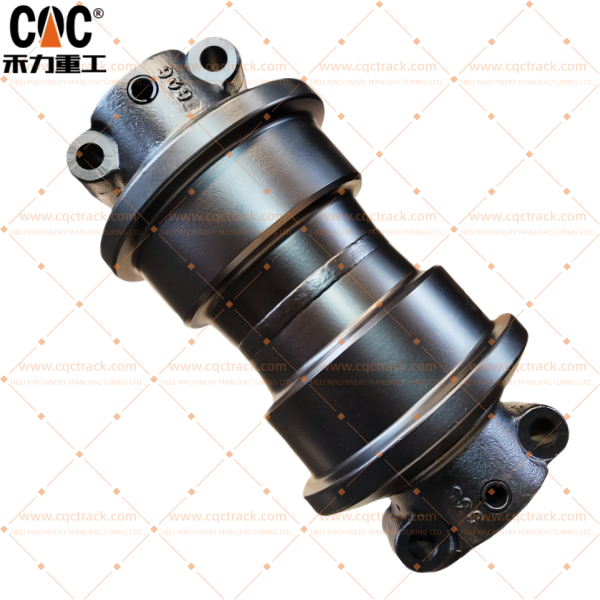
XCMG XE690DK Track Roller Assembly (800370495): A Technical Dissection of Heavy-Duty Chassis Engineering by HELI – CQCTRACK
Executive Summary: The Keystone of Undercarriage Integrity
The Track Roller Assembly (Part No.: 800370495) for the XCMG XE690DK heavy-duty crawler excavator represents a pinnacle of applied mechanical engineering in the realm of off-road machinery. As a fundamental chassis component, its performance dictates the machine’s stability, travel efficiency, and overall structural longevity. Manufactured by HELI – CQCTRACK, a specialist in heavy-duty undercarriage systems, this assembly is not merely a replacement part but an engineered system designed to exceed the rigorous demands of mining, large-scale earthmoving, and heavy construction. This document provides an exhaustive technical analysis of its design philosophy, material science, manufacturing pedigree, and operational value proposition.
**1. Component Identification & Functional Mechanics
1.1 Primary Mechanical Function
The track roller (or bottom roller) is a critical load-bearing element within the crawler undercarriage. Its primary mechanical functions are multifaceted:
- Dynamic Load Support: Directly supports the machine’s gross operational weight (GOW), distributing immense static and dynamic loads to the track chain and, subsequently, to the ground. It acts as the primary interface for vertical force transmission during stationary operation and travel.
- Track Chain Guidance & Constraint: Precisely guides the inner rail of the track chain (the track link guide bosses), maintaining lateral alignment and preventing derailment while constraining excessive vertical movement of the track.
- Shock Absorption & Damping: Serves as the first line of defense against ground-induced impact loads and vibrations, absorbing and dissipating energy that would otherwise transfer directly to the track frame and mainframe, reducing structural fatigue.
- Friction Management & Travel Efficiency: By providing a smooth, hardened rolling surface, it minimizes rolling friction between the track chain and the undercarriage, directly contributing to improved travel speed and reduced hydraulic system strain and fuel consumption.
1.2 Target Machine & System Integration
- Primary Host Machine: XCMG XE690DK Heavy-Duty Crawler Excavator, a machine class engineered for severe-duty cycles and high productivity.
- OEM Reference & Compatibility: Direct dimensional and functional replacement for XCMG part number 800370495. Engineered for seamless integration with the XE690DG’s track frame, track link, and bolt pattern.
- Position in System: Multiple units are installed along the track frame (equalized bogie or fixed configuration) to form the primary load-bearing plane for the excavator.
**2. Design & Manufacturing Philosophy: Beyond Commodity to Engineered System
For the XE690DK, operating in environments with high point-loading from rocky terrain and continuous abrasive wear, the track roller must be an engineered system. HELI – CQCTRACK‘s approach is rooted in Systems Engineering, viewing the roller not as a single piece, but as an integrated assembly where material, geometry, and tribology intersect.
2.1 Core Manufacturing Process: Precision Forging & Integrated Assembly
- Material Synthesis: Selection of a fine-grained, high-alloy steel (e.g., SAE 4140/42CrMo equivalent). This choice is critical for achieving deep hardenability, ensuring that the high surface hardness extends well below the wear surface to resist spalling and subsurface fatigue failure.
- Hot Die Forging: The roller body is created through closed-die forging. This process reorients the metallic grain flow radially around the axle bore and along the rolling surface contour. This creates a continuous “fiber” structure, dramatically enhancing fatigue life and impact resistance compared to cast or fabricated alternatives, which have isotropic or interrupted grain structures prone to crack propagation.
- Precision Machining: Post-forging, the component undergoes multi-axis CNC machining. Critical tolerances are achieved on:
- The outer diameter rolling surface for uniform load distribution.
- The flange profiles for precise track link guidance.
- The axle bore and sealing gland surfaces (IT6-IT7 tolerances) to ensure perfect bearing fit and seal integrity.
- Gradient Heat Treatment: A proprietary quench and temper (Q&T) process is applied to create a non-uniform, engineered hardness profile. The outer rolling surface and flanges achieve a high hardness (58-62 HRC) for maximum abrasion resistance. The core and hub areas are tempered to a lower hardness (38-45 HRC), providing the necessary ductility and toughness to absorb high-impact shocks without brittle fracture.
- System Assembly & Tribological Integration:
- Bearing Selection: High-capacity, tapered roller bearings are used for their ability to handle combined radial and axial (thrust) loads generated during turning and side-slope operation.
- Sealing System: A multi-labyrinth, lip-seal hybrid system is employed. This often includes a primary nitrile rubber lip seal, a metallic labyrinth dust ring, and a grease-filled chamber. This design creates multiple barriers against contamination (slurry, fines) and effectively retains lubrication, even under high-pressure washdown conditions.
- Lubrication Engineering: The assembly is pre-filled with a high-temperature, extreme-pressure (EP) lithium-complex grease. The internal cavity design facilitates grease circulation, providing continuous lubrication to bearings and seals.
2.2 Comparative Advantage Analysis
- vs. Standard Rollers: Commodity rollers often use simpler metallurgy and sealing. The HELI-CQCTRACK design’s forged integrity and advanced sealing directly translate to a 30-50% increase in expected service life in abrasive conditions, and a near-elimination of premature bearing failure due to seal ingress.
- vs. Rebuilt/Generic Assemblies: While cost-effective short-term, rebuilt rollers often lack the original metallurgical properties and precise dimensional restoration. Our new, forged assembly ensures original equipment (OE) level performance, correct internal clearances, and predictable wear patterns, protecting the value of the larger undercarriage investment.
**3. Detailed Technical Specifications & Performance Data
3.1 Material & Physical Properties
| Property | Specification / Value | Engineering Significance |
|---|---|---|
| Base Material | Alloy Steel (42CrMo4 / 4140 Equivalent) | Optimal balance of strength, hardenability, and toughness. |
| Surface Hardness | 58 – 62 HRC | Maximizes resistance to abrasive wear from sand, rock, and soil. |
| Core Hardness | 38 – 45 HRC | Provides ductile core to arrest cracks and absorb high-impact loads. |
| Flange Hardness | 56 – 60 HRC | Resists wear from track link guide boss contact during sidetracking. |
| Bearing Type | Tapered Roller Bearing (TRB) | Designed for combined radial/thrust loads; allows precise preload setting. |
| Seal Type | Combined Labyrinth & Radial Lip Seal | Multi-stage contaminant exclusion; extended lubrication retention. |
3.2 Dimensional & Operational Tolerances
- Rolling Surface Diameter: Machined to OEM blueprint with minimal runout (<0.05mm) to ensure smooth travel and uniform load.
- Axle Bore Tolerance: H7 precision fit for bearing outer race, ensuring optimal load transfer and heat dissipation.
- Seal Surface Finish: Ra < 0.8 μm on sealing contact surfaces to ensure lip seal integrity and long-term seal life.
**4. HELI – CQCTRACK: A Profile in Heavy-Duty Manufacturing Excellence
Our identity as specialist heavy-duty crawler excavator chassis components manufacturers is defined by vertical integration and a data-driven quality regime:
- Full Vertical Integration: Control over the entire value chain—from steel sourcing, die design, forging, heat treatment, machining, to final assembly—ensures traceability and eliminates quality variance from subcontracted processes.
- Dedicated Forging & Heat Treatment Facility: Equipped with computer-controlled furnaces and quenching systems that allow for precise repeatability of the critical gradient hardness profile.
- Comprehensive Quality Assurance Protocol: Beyond ISO 9001, our protocol includes:
- Ultrasonic Testing (UT) of raw forgings to detect internal flaws.
- Spectroscopic Analysis of every steel melt heat.
- Coordinate Measuring Machine (CMM) verification of all critical geometries.
- Simulated Load & Rotation Testing on assembled rollers to verify seal integrity, rotational torque, and bearing preload under load.
- Application Engineering Support: We provide technical consulting on undercarriage wear management, including track tension optimization and inspection intervals, to maximize the service life of our components within the entire system.
**5. Operational Economics & Total Cost of Ownership (TCO) Modeling
For the XE690DG operator, the track roller is a high-impact consumable with direct cost-per-hour (CPH) implications. The economic rationale for selecting a premium forged assembly is clear:
- Reduced Direct Replacement Costs: Extended service life means fewer units consumed over the machine’s lifetime, reducing direct parts expenditure.
- Minimized Collateral Damage: A failing roller (e.g., seized bearing, broken flange) causes accelerated, asymmetric wear on the expensive track chain (links, bushings, pads). A reliable roller protects this significantly larger capital investment.
- Optimized Machine Availability: Reduced frequency of undercarriage maintenance intervals increases machine utilization (availability), directly impacting revenue generation in project-based work.
- Fuel & Efficiency Savings: A smoothly rotating roller assembly reduces travel resistance. Over thousands of operational hours, this translates to measurable fuel savings and reduced strain on the hydraulic travel motors.
- Resale Value Preservation: A well-maintained undercarriage with high-quality components is a primary determinant of a used excavator’s resale value. Our assemblies help preserve this asset value.
TCO Conclusion: While the initial procurement cost of the HELI – CQCTRACK Forged Track Roller Assembly (800370495) may be higher than non-forged or generic alternatives, its superior durability, system protection, and contribution to operational efficiency result in the lowest possible total cost per operating meter or hour for the XCMG XE690DK.
Conclusion: Engineering Resilience for Demanding Terrains
The XCMG XE690DK Track Roller Assembly (800370495) from HELI – CQCTRACK is the product of a deliberate engineering philosophy that prioritizes system integrity over component isolation. By fusing advanced material science with precision forging, controlled heat treatment, and robust sealing technology, we deliver a chassis component that provides predictable, long-term performance. It is engineered not just to fit, but to enhance the resilience and productivity of the XE690DG excavator, ensuring it remains a dependable asset in the world’s most challenging earthmoving and mining applications. This is the definitive choice for professionals who equate mechanical reliability with operational and financial success.
Products categories
-

Mini Excavator Bottom Roller PC100 Track Roller...
-

SDLG-E6730 undercarriage Track Bottom Roller As...
-
E70 E70b E120 E200 E300 E336 Excavator Track Ro...
-

KOBELCO 24100N7039F3 24100N8642F2 72216674 SK45...
-

CAT 6095428 MD6250 Track Lower Roller Group | H...
-

Doosan Excavator Track Roller Dx55 Dx60 Dx70 Dx...


