
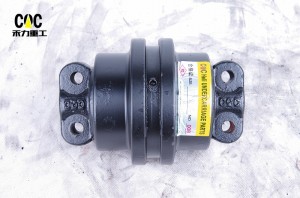
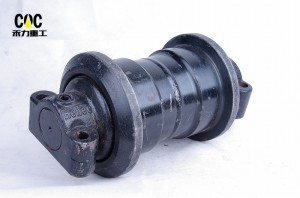
SANY 13881206 SY950 SY980 Track Bottom Roller Assy / Heavy-duty Tracked excavator undercarriage parts Source Manufacturer -/-CQC TRACK -/-From quanzhou China

SANY 13881206 SY950 SY980 Track Bottom Roller Assembly – Heavy-duty Tracked Excavator Undercarriage Parts Manufacturer- CQC TRACK
Executive Summary
This technical publication delivers an exhaustive examination of the SANY 13881206 track bottom roller assembly—a mission-critical undercarriage component engineered for the SY950 and SY980 heavy-duty tracked excavators. These 90-95 ton class machines represent SANY’s flagship mining and heavy construction excavators, deployed in the most demanding applications including open-pit mining operations, large-scale quarry development, major infrastructure projects, and massive earthmoving operations worldwide.
The bottom roller assembly (alternatively designated as track roller, lower roller, or track supporting roller) serves the essential function of supporting the machine’s entire operating weight and distributing it evenly across the track chain while guiding the track during travel and working operations. For operators of SANY’s largest excavators, understanding the engineering principles, material specifications, and manufacturing quality indicators of this component is essential for making informed procurement decisions that optimize total cost of ownership in extreme-duty applications.
This analysis examines the SANY 13881206 bottom roller through multiple technical lenses: functional anatomy, metallurgical composition for mining-class applications, advanced manufacturing process engineering, rigorous quality assurance protocols, and strategic sourcing considerations—with particular focus on CQC TRACK as a specialized source manufacturer of heavy-duty tracked excavator undercarriage parts operating from Quanzhou, China, a premier industrial cluster for construction machinery manufacturing.
1. Product Identification and Technical Specifications
1.1 Component Nomenclature and Application
The SANY 13881206 track bottom roller assembly is an OEM-specified undercarriage component engineered specifically for SANY’s largest excavator models. The part number 13881206 represents SANY’s proprietary identification code, corresponding to precise engineering drawings, dimensional tolerances, and material specifications developed through the original equipment manufacturer’s rigorous validation protocols.
This bottom roller assembly is compatible with the following SANY heavy-duty excavator models:
| Model | Operating Weight Range | Engine Power | Typical Applications |
|---|---|---|---|
| SY950 | 90-95 tons | 420-450 kW | Large-scale mining, major quarrying, heavy infrastructure |
| SY980 | 95-100 tons | 450-500 kW | Open-pit mining, primary overburden removal, massive excavation |
These machines represent SANY’s flagship excavator lineup, extensively deployed in mining operations across Australia, Indonesia, South America, Africa, and other resource-rich regions worldwide. The undercarriage system for these machines typically incorporates 8-10 bottom rollers per side, each supporting substantial loads during operation.
1.2 Primary Functional Responsibilities
The bottom roller assembly in 90-100 ton class excavator applications performs three interconnected functions critical to machine performance and undercarriage longevity:
Weight Distribution and Load Transfer: The roller bears the excavator’s immense gravitational force—approximately 90-100 tons for the SY950/SY980 class—and distributes this load evenly across the lower section of the track chain. During excavation cycles, dynamic loads can increase instantaneously by factors of 2.5 to 3.5 times static weight, subjecting the roller to extreme compressive and impact forces that demand exceptional structural integrity.
Track Guidance: The dual-flange configuration characteristic of heavy-duty excavator rollers engages with the track link sidebars, preventing lateral displacement and ensuring precise tracking. This guidance function becomes particularly critical during turning operations, operation on side slopes (up to 30° in mining applications), and when traversing uneven terrain where lateral forces attempt to displace the track chain from its intended path.
Impact Load Management: During travel over uneven terrain and when crossing obstacles, the bottom roller absorbs and distributes initial contact shocks, protecting the track frame, final drive, and upper structure from shock-induced damage. This function demands both exceptional structural strength and controlled deflection characteristics.
1.3 Technical Specifications and Dimensional Parameters
While SANY’s exact engineering drawings remain proprietary, industry-standard specifications for 90-100 ton class excavator bottom rollers typically encompass the following parameters based on established manufacturing standards:
| Parameter | Typical Specification Range | CQC TRACK Achievement | Engineering Significance |
|---|---|---|---|
| Outer Diameter | 600-680 mm | ±0.10 mm tolerance | Determines contact area with track link and rolling resistance |
| Shaft Diameter | 100-120 mm | h6 tolerance (±0.015-0.025 mm) | Shear and bending capacity under combined loads |
| Roller Width | 140-180 mm | ±0.15 mm | Contact surface area with track chain rail |
| Flange Width | 120-150 mm | ±0.15 mm | Lateral stability and track guidance effectiveness |
| Flange Height | 25-32 mm | Controlled profile | Anti-derailment protection during side-slope operation |
| Flange-to-Flange Distance | 200-250 mm | Precision-machined | Accommodates track link width with proper clearance |
| Mounting Configuration | Fixed shaft with end collars | Heavy-duty design | Secure attachment to track frame with proper load distribution |
| Assembly Weight | 200-300 kg | Verified | Material content and structural robustness indicator |
| Bearing Configuration | Matched heavy-duty tapered roller bearings | Timken® / equivalent premium source | Accommodates extreme combined radial and thrust loads |
| Material Specification | SAE 4140 / 42CrMo / 50Mn premium alloy steel | Premium certified alloy | Optimal balance of hardness and toughness for mining duty |
| Core Hardness | 280-350 HB (29-38 HRC) | 100% verified | Toughness for impact absorption |
| Surface Hardness | HRC 58-62 | Induction hardened | Wear resistance for extended service life |
| Hardened Case Depth | 10-15 mm | Controlled gradient | Depth of wear-resistant layer for extreme-duty cycles |
| Tread Runout | ≤0.15 mm TIR | CMM verified | Vibration and track chain impact prevention |
| Concentricity | ≤0.10 mm | CMM verified | Smooth rotation and even wear distribution |
1.4 Component Anatomy and Design Architecture
The bottom roller assembly for SANY SY950/SY980 comprises several key components engineered for extreme-duty operation:
Roller Body: The main wheel that contacts the track chain and supports the machine weight, featuring robust unitary construction with precision-machined tread surface and induction-hardened flange faces. The roller incorporates a substantially unitary disk-shaped web centered on the hub and extending radially outward to the outer rim, providing optimal load transfer between hub and rim while minimizing stress concentration.
Outer Rim Configuration: The outer rim features a precisely contoured tread surface with optimized crown profile to accommodate minor track misalignment and prevent edge loading. The dual-flange configuration provides positive track retention in both directions.
Shaft: The stationary axle manufactured from high-strength SAE 4140 alloy steel with precision-ground bearing journals (h6 tolerance) and surface treatments for enhanced durability. The shaft features precision-machined mounting ends for secure attachment to the track frame via end collars.
Bearing System: Matched sets of heavy-duty tapered roller bearings with dynamic load ratings of 600-900 kN, featuring machined brass cages for superior shock load resistance and C4 internal clearance for thermal expansion accommodation in mining applications.
Sealing System: Multi-stage contamination barriers including primary floating seals (HRC 58-64, flatness ≤1.0 µm), secondary HNBR lip seals, and external labyrinth dust guards with multiple chambers designed for extreme mining environments.
End Collars: Heavy-duty forged steel collars that secure the roller to the track frame, featuring precision-machined mounting surfaces and high-strength fastener interfaces.
2. Metallurgical Foundation: Material Science for Mining-Class Excavator Applications
2.1 Premium Alloy Steel Selection Criteria for Extreme Duty
The service environment of a 90-100 ton class excavator bottom roller presents the most demanding material requirements in the heavy equipment industry. The component must simultaneously:
- Resist abrasive wear from continuous contact with the track chain and exposure to mining debris containing highly abrasive minerals such as quartz (hardness 7 Mohs), silicates, and granite
- Withstand impact loads from machine travel over rough mine terrain, crossing obstacles, and dynamic loading during excavation cycles
- Maintain structural integrity under cyclic loading exceeding 10⁷ cycles over the machine’s lifetime
- Preserve dimensional stability despite exposure to temperature extremes (-40°C to +50°C), moisture, and chemical contaminants including fuels, lubricants, and mining reagents
Premium manufacturers like CQC TRACK select specific premium alloy steel grades that achieve the optimal balance of hardness, toughness, and fatigue resistance for mining-class excavator applications:
SAE 4140 / 42CrMo Chromium-Molybdenum Alloy: This is the preferred material for extreme-duty bottom rollers in the SY950/SY980 class. With carbon content of 0.38-0.45%, chromium of 0.90-1.20%, and molybdenum of 0.15-0.25%, SAE 4140 provides:
| Property | Typical Value | Engineering Significance |
|---|---|---|
| Ultimate Tensile Strength | 950-1100 MPa | Load-carrying capacity under extreme stress |
| Yield Strength | 800-900 MPa | Resistance to permanent deformation |
| Elongation | 12-16% | Ductility for impact absorption |
| Reduction of Area | 45-55% | Material quality indicator |
| Hardness (Q&T) | 280-350 HB | Core toughness for impact resistance |
| Impact Toughness (Charpy V-notch at -20°C) | 40-60 J | Low-temperature performance for cold climate mining operations |
SAE 4340 / 40CrNiMo Premium Alloy: For the most demanding mining applications requiring maximum toughness, SAE 4340 with nickel addition (1.65-2.00%) provides:
- Even higher hardenability for very large sections (up to 150 mm)
- Superior toughness at high strength levels (Charpy impact 60-80 J)
- Enhanced fatigue strength
- Better low-temperature impact properties (-40°C capability)
50Mn / 55Mn Manganese Steel: For applications where enhanced wear resistance is prioritized, 50Mn with carbon 0.45-0.55% and manganese 1.4-1.8% provides:
- Excellent surface hardenability (critical for large-diameter rollers)
- Good wear resistance from carbide formation
- Adequate toughness for most mining applications
- Boron micro-alloyed variants for enhanced hardenability in large sections
Material Traceability: Reputable manufacturers provide comprehensive material documentation, including Mill Test Reports (MTRs) certifying chemical composition with element-specific analysis (C, Si, Mn, P, S, Cr, Mo, Ni, B as applicable). Spectrographic analysis confirms alloy chemistry against certified specifications.
2.2 Forging vs. Casting: The Grain Structure Imperative
The primary forming method fundamentally determines the bottom roller’s mechanical properties and service life. While casting offers cost advantages for simple geometries, it produces an equiaxed grain structure with random orientation, potential porosity, and inferior impact resistance. Premium mining-class excavator bottom roller manufacturers exclusively employ closed-die hot forging for the roller body.
The forging process for SY950/SY980 class components begins with cutting large-diameter steel billets (typically 300-400 mm diameter) to precise weight, heating them to approximately 1150-1250°C until fully austenitized, then subjecting them to high-pressure deformation between precision-machined dies in hydraulic presses capable of 8,000-15,000 tons of force.
This thermo-mechanical treatment produces continuous grain flow that follows the component contour, aligning grain boundaries perpendicular to principal stress directions. The resulting structure exhibits:
| Property Improvement | Forged vs. Cast | Engineering Benefit |
|---|---|---|
| Fatigue Strength | +20-30% | Longer service life under cyclic loading |
| Impact Energy Absorption | +30-40% | Better resistance to shock loads from mine terrain |
| Structural Integrity | No porosity/inclusions | Elimination of failure initiation sites |
| Grain Orientation | Aligned with stress | Optimized load distribution under extreme loads |
| Density | 100% theoretical | Maximum material strength |
After forging, components undergo controlled cooling to prevent the formation of detrimental microstructures such as Widmanstätten ferrite or excessive grain boundary carbide precipitation.
2.3 Dual-Property Heat Treatment Engineering for Mining-Class Components
The metallurgical sophistication of a premium mining-class excavator bottom roller manifests in its precisely engineered hardness profile—an extremely hard, wear-resistant surface coupled with a tough, impact-absorbing core:
Quenching and Tempering (Q&T) : The entire forged roller body is austenitized at 840-880°C, then rapidly quenched in agitated water, oil, or polymer solution. This transformation produces martensite—providing maximum hardness but with associated brittleness. Immediate tempering at 500-650°C allows carbon to precipitate as fine carbides, relieving internal stresses and restoring toughness. The resulting core hardness typically ranges from 280-350 HB (29-38 HRC), providing optimal toughness for impact absorption in mining-class excavator applications.
Induction Surface Hardening: Following finish machining, the critical wear surfaces—specifically the tread diameter and flange faces—undergo localized induction hardening. A precision-designed multi-turn copper inductor coil surrounds the component, inducing eddy currents that rapidly heat the surface layer to austenitizing temperature (900-950°C) within seconds. Immediate water quenching produces a martensitic case of 10-15 mm depth with surface hardness of HRC 58-62, providing exceptional resistance to abrasive wear from track chain contact in mining environments.
Hardness Profile Verification: Quality manufacturers perform microhardness traverses on sample components to verify case depth compliance with specifications. The hardness gradient from surface through the hardened case to the core must follow a controlled transition to prevent spalling or case-core separation under impact loading. A typical hardness profile shows:
| Depth from Surface | Hardness Range | Microstructure |
|---|---|---|
| 0-2 mm | HRC 58-62 | Tempered martensite |
| 2-5 mm | HRC 55-58 | Tempered martensite |
| 5-8 mm | HRC 50-55 | Tempered martensite/bainite |
| 8-12 mm | HRC 45-50 | Bainite/martensite |
| 12-15 mm | HRC 35-45 | Bainite/ferrite |
| Core (>15 mm) | 280-350 HB | Tempered martensite/bainite |
2.4 Comprehensive Quality Assurance Protocols for Mining Components
Manufacturers like CQC TRACK implement multi-stage quality verification throughout production, with enhanced protocols for mining-class excavator components:
- Spectroscopic Material Analysis: Confirms alloy chemistry against certified specifications at raw material receipt, with enhanced element verification for critical alloys. Chemistry must meet strict limits for all elements, particularly carbon (±0.03%), manganese (±0.05%), chromium (±0.05%), molybdenum (±0.03%), and nickel (±0.05%).
- Ultrasonic Testing (UT) : 100% inspection of critical forgings verifies internal soundness, detecting any centerline porosity, inclusions, or laminations that could compromise structural integrity under extreme mining loads. Testing follows ASTM A388 or equivalent standards with acceptance criteria of no indications exceeding 2 mm flat-bottom hole equivalent.
- Hardness Verification: Rockwell or Brinell hardness testing confirms both core hardness after Q&T treatment and surface hardness after induction hardening. Enhanced sampling rates for mining components (up to 100% for critical features) with full documentation.
- Magnetic Particle Inspection (MPI) : Examines critical areas—particularly flange roots, shaft transitions, and fillet radii—detecting any surface-breaking cracks or grinding burns with enhanced sensitivity. Testing follows ASTM E709 or equivalent standards with acceptance criteria of no linear indications.
- Dimensional Verification: Coordinate Measuring Machines (CMM) verify critical dimensions, with statistical process control maintaining process capability indices (Cpk) exceeding 1.33 for critical features. Full dimensional reports are provided with each shipment.
- Mechanical Testing: Sample components undergo tensile testing and impact testing (Charpy V-notch) at reduced temperatures (-20°C to -40°C) to verify toughness for cold-climate mining operations.
- Microstructural Evaluation: Metallographic examination verifies proper grain structure (ASTM grain size 5-8), case depth (10-15 mm), martensitic structure (minimum 90% martensite in case), and absence of detrimental phases such as retained austenite or grain boundary carbides.
- Running Test Validation: Assembled bottom rollers undergo running tests that simulate actual operating conditions, with staged loading from 20-30% to 110-120% of rated load, monitoring temperature rise, vibration spectra, and noise levels to verify performance before shipment.
3. Precision Engineering: Component Design and Manufacturing
3.1 Roller Geometry Optimization for Mining-Class Excavators
The bottom roller geometry for SY950/SY980 class machines must precisely match the track chain specifications while accommodating the extreme loads of mining operation:
Outer Diameter: The 600-680 mm diameter is calculated to provide appropriate rotational speed and bearing L10 life at typical travel speeds (1.5-3 km/h in mining applications). The diameter must be maintained within tight tolerances (±0.10 mm) to ensure consistent ground contact and proper chain support height.
Tread Profile Design: The contact surface incorporates an optimized crown profile (typically 1.0-2.0 mm radius) to accommodate minor track misalignment and prevent edge loading that could accelerate localized wear. The profile is developed through finite element analysis to ensure uniform pressure distribution across the contact patch under varying load conditions. Key design parameters include:
| Tread Parameter | Specification | Engineering Significance |
|---|---|---|
| Crown Radius | 1.0-2.0 mm | Accommodates misalignment, prevents edge loading |
| Surface Roughness (Ra) | ≤1.6 µm | Optimizes wear characteristics with track bushings |
| Profile Tolerance | ±0.10 mm | Ensures consistent chain engagement |
| Hardness Transition | Controlled gradient | Prevents spalling under impact |
Flange Configuration: Bottom rollers for mining-class excavators feature robust double-flange designs that provide positive track retention in both directions—essential for mining operations on side slopes up to 30°. Critical flange design elements include:
| Flange Feature | Specification | Engineering Significance |
|---|---|---|
| Flange Height | 25-32 mm | Provides robust lateral constraint to prevent derailment |
| Flange Width (radial thickness) | 30-40 mm | Ensures adequate strength for anti-derailment function |
| Flange Face Relief Angle | 8-12° | Facilitates debris ejection, prevents material packing |
| Flange Root Radius | 12-18 mm | Minimizes stress concentration, prevents crack initiation |
| Flange Face Hardness | HRC 58-62 | Wear resistance against track link sidebars |
| Flange-to-Flange Distance | 200-250 mm | Accommodates track link width with 5-10 mm clearance |
Roller Width: The 140-180 mm overall width provides adequate contact surface with the track chain rail, distributing load to minimize contact pressure and wear. The tread width is typically 100-120 mm, with flanges extending beyond.
3.2 Shaft and Bearing System Engineering for Extreme Loads
The stationary shaft must withstand continuous bending moments and shear stresses while maintaining precise alignment with the rotating roller body. For SY950/SY980 applications, shaft diameters typically range 100-120 mm, calculated based on:
- Static machine weight distributed to each bottom roller (10-15 tons per roller, depending on configuration)
- Dynamic load factors of 3.0-4.0 for mining applications (higher than construction due to impact)
- Track tension loads transmitted through the chain during operation
- Side loads during turning and slope operation (up to 30-40% of vertical load)
The bearing system for mining-class excavator bottom rollers employs matched sets of heavy-duty tapered roller bearings, specifically selected for extreme-duty applications:
| Bearing Parameter | Specification | Engineering Significance |
|---|---|---|
| Bearing Type | Matched tapered roller bearings (double row) | Simultaneously supports high radial and thrust loads |
| Dynamic Load Rating (C) | 600-900 kN | Appropriate for 90-100 ton class machines |
| Static Load Rating (C0) | 1000-1500 kN | Withstands peak impact loads without permanent deformation |
| Cage Design | Machined brass cage | Superior strength for shock loading compared to stamped steel |
| Internal Clearance | C4 class | Accommodates thermal expansion during continuous operation |
| Raceway Finish | Super-finished (Ra ≤0.1 µm) | Reduces friction, extends fatigue life |
| Roller Profile | Optimized crowning | Prevents edge loading under misalignment |
| Material | Case-hardened bearing steel (SAE 4320/8620) | Maximum surface durability with tough core |
Premium manufacturers source bearings from reputable suppliers such as Timken®, NTN, KOYO, SKF, or equivalent high-quality bearing manufacturers with proven performance in mining applications.
The shaft bearing journals are precision-ground to h6 tolerance (±0.015-0.025 mm) and surface-treated (e.g., chrome plating, nitriding, or induction hardening) for enhanced wear resistance and corrosion protection.
3.3 Advanced Multi-Stage Sealing Technology for Mining Environments
The seal system is the single most critical determinant of bottom roller longevity in mining-class excavator applications, where machines operate in environments with extreme contamination levels. Industry data indicates that over 80% of premature roller failures in mining originate from seal compromise.
Premium mining-class excavator bottom rollers from CQC TRACK employ multi-stage, mining-grade sealing systems specifically engineered for extreme contamination environments:
Primary Heavy-Duty Floating Seal: Precision-ground hardened iron or steel rings with lapped sealing faces achieving flatness within 0.5-1.0 µm. For mining applications, seal face materials and coatings are selected for:
| Seal Feature | Specification | Benefit |
|---|---|---|
| Seal Ring Material | Through-hardened steel or special iron alloy (HRC 58-64) | Maximum wear resistance |
| Seal Face Flatness | ≤1.0 µm | Maintains continuous contact, prevents leakage |
| Seal Face Roughness | Ra ≤0.1 µm | Minimizes friction, extends life |
| Seal Face Coating | Titanium nitride or chromium nitride (optional) | Enhanced wear resistance for extreme abrasion |
| Seal Ring Hardness | HRC 58-64 | Resists abrasive wear from quartz/silicate contaminants |
Secondary Radial Lip Seal: Manufactured from premium elastomer materials with:
- HNBR (Hydrogenated Nitrile Butadiene Rubber) : Exceptional temperature resistance (-40°C to +150°C), chemical compatibility with EP greases, enhanced abrasion resistance
- FKM (Fluoroelastomer) : For high-temperature applications or chemical exposure (optional)
- Positive sealing pressure maintained by garter spring (stainless steel for corrosion resistance)
- Dust lip integrated design to exclude coarse contaminants
External Labyrinth-Style Dust Guard: Creates a tortuous path with multiple chambers that progressively trap coarse contaminants before they reach the primary seals. The labyrinth is:
- Packed with high-adhesion, extreme-pressure mining-grade grease
- Designed with expulsion channels for self-cleaning action during rotation
- Configured with multiple stages (typically 3-5 chambers) for maximum protection
- Protected by sacrificial wear rings that maintain seal alignment even as components wear
Grease Cavity: An intermediate cavity packed with mining-grade EP grease that acts as a barrier, expelling any potential contaminants that bypass the outer seals.
Pre-Lubrication: The bearing cavity is pre-filled with mining-grade, high-adhesion, extreme pressure (EP) grease containing:
- Molybdenum disulfide (MoS₂) or graphite for boundary lubrication under extreme pressure
- Enhanced anti-wear additives (ZDDP, phosphorus compounds) for shock load protection
- Corrosion inhibitors for wet mining environment operation
- Oxidation stabilizers for extended service intervals (2,000+ hours)
- Solid lubricants for emergency operation after lubrication breakdown
3.4 Mounting Configuration and Track Frame Interface
The bottom roller mounts to the track frame via precision-machined mounting surfaces and robust end collars that must withstand the full dynamic loads of mining operation. Critical design features include:
- Precision-Machined Mounting Surfaces: Ensure proper alignment and load distribution to the track frame. Surface flatness typically maintained within 0.1 mm over 100 mm.
- High-Strength Fasteners: Grade 12.9 bolts (typically M30-M36) with controlled tightening specifications (torque values 1,500-2,500 Nm depending on size).
- Positive Locking Features: Tab washers, locking plates, or thread-locking compounds to prevent loosening under severe vibration.
- End Collar Design: Heavy-duty forged steel collars with precision-machined interfaces and hardened wear surfaces.
- Corrosion Protection: Heavy-duty paint systems (epoxy or polyurethane) or zinc-rich coatings for mine environment durability, often with dry film thickness of 150-250 µm.
3.5 Precision Machining and Quality Control
Modern CNC machining centers achieve dimensional tolerances that directly correlate with service life in mining-class excavator applications. Critical parameters for SY950/SY980 class bottom rollers include:
| Feature | Typical Tolerance | Measurement Method | Consequence of Deviation |
|---|---|---|---|
| Shaft Journal Diameter | h6 to h7 (±0.015-0.025 mm) | Micrometer (0.001 mm resolution) | Clearance affects lubrication film and load distribution |
| Bearing Bore Diameter | H7 to H8 (±0.020-0.035 mm) | Bore gauge / CMM | Fit with bearing outer race; incorrect fit causes premature bearing failure |
| Seal Housing Bore | H8 to H9 (±0.025-0.045 mm) | Bore gauge / CMM | Seal compression affects sealing force and life |
| Tread Diameter | ±0.10 mm | Micrometer / CMM | Consistent ground contact and chain support |
| Flange-to-Flange Distance | ±0.15 mm | CMM | Proper track link engagement and guidance |
| Flange Parallelism | ≤0.05 mm across diameter | CMM | Misalignment induces uneven wear and side loading |
| Tread Runout | ≤0.15 mm total indicated | Dial indicator / CMM | Vibration and track chain impact |
| Concentricity | ≤0.10 mm | CMM | Smooth rotation and even wear distribution |
| Surface Finish (tread) | Ra ≤1.6 µm | Profilometer | Wear rate and chain interaction |
| Surface Finish (bearing journals) | Ra ≤0.4 µm | Profilometer | Bearing life and lubrication |
| Surface Finish (seal areas) | Ra ≤0.4 µm | Profilometer | Seal wear rate and leakage prevention |
CNC-controlled turning and grinding processes guarantee precise geometry and surface finish for smooth track chain interaction. In-process dimensional verification with real-time feedback to machine operators enables immediate correction of process drift.
3.6 Assembly and Pre-Delivery Testing Protocols
Final assembly is performed in clean-room conditions to prevent contamination—a critical requirement for components where even microscopic contaminants can initiate premature wear. Assembly protocols include:
- Component Cleaning: Ultrasonic cleaning of all components before assembly using specialized cleaning solutions that remove all machining residues, oils, and particulates. Cleanliness verification via particle count testing.
- Controlled Environment: Positive-pressure clean areas with HEPA filtration (Class 100,000 or better) and temperature/humidity control (20-25°C, 40-60% RH).
- Bearing Installation: Precision pressing with force monitoring to ensure proper seating; bearings are heated for expansion to facilitate installation without damage (induction heaters with temperature control to 110-120°C maximum).
- Preload Setting: Tapered roller bearings are adjusted to specified preload using specialized fixtures and torque measurement (typically 20-40 N-m rotational torque). Preload verification via feeler gauge measurement of internal clearance.
- Seal Installation: Specialized hydraulic or mechanical presses with alignment fixtures prevent damage to sealing lips and faces; seal faces are lubricated during installation with assembly grease.
- Lubrication: Measured grease fill with specified mining-grade lubricants (typically 2.0-3.5 kg per assembly); air pockets are eliminated during filling through controlled pressure and venting.
- End Collar Installation: Precision fit and secure fastening with proper torque and locking features.
- Rotation Testing: Verification of smooth rotation and correct bearing preload.
Pre-delivery testing for mining-class excavator bottom rollers includes:
- Rotational torque test to verify smooth rotation and correct bearing preload (measurement of breakaway and running torque, typically 25-45 N-m initial, stabilizing at 20-35 N-m)
- Seal integrity test with pressurized air (0.5-1.0 bar) and soap solution to detect leakage paths; more sophisticated testing may use pressure decay monitoring (loss <0.1 bar/minute over 5 minutes)
- Dimensional inspection of the assembled unit to verify all critical fits (CMM verification)
- Visual inspection of seal installation, fastener torque, and overall workmanship
- Running test on sample basis to verify performance under simulated loads, monitoring temperature rise (should not exceed 40°C above ambient), vibration spectra, and noise levels
- Ultrasonic re-inspection of critical areas after final machining (shaft journals, flange roots)
4. CQC TRACK: Manufacturer Profile from Quanzhou, China
4.1 Company Overview and Strategic Location
CQC TRACK (operating under HELI Group affiliation) is a specialized industrial manufacturer and supplier of heavy-duty undercarriage systems and chassis components, operating on both ODM and OEM principles. Based in Quanzhou, Fujian Province—a premier industrial cluster for construction machinery manufacturing in China—the company has established itself as a significant player in the global undercarriage components market, with particular strength in mining-class excavator components.
Quanzhou’s strategic location offers significant advantages for global export:
- Proximity to Major Ports: Efficient access to Xiamen Port and Quanzhou Port, two of China’s busiest international shipping hubs
- Industrial Ecosystem: Concentration of machinery manufacturing expertise, supply chain partners, and skilled workforce
- Logistics Infrastructure: Well-developed transportation networks facilitating efficient global distribution
With specialized focus on undercarriage components for global markets, CQC TRACK has developed comprehensive capabilities across the entire undercarriage product spectrum, including track rollers, carrier rollers, front idlers, sprockets, track chains, and track shoes for applications ranging from mini excavators to ultra-large mining-class machines up to 300 tons. The company serves as a source manufacturer for heavy-duty tracked excavator undercarriage parts, supplying international distributors, mining operations, equipment dealers, and aftermarket networks worldwide.
4.2 Technical Capabilities and Engineering Expertise for Mining Applications
Integrated Heavy-Duty Manufacturing: CQC TRACK controls the full production cycle from material sourcing and forging to precision machining, heat treatment, assembly, and quality testing. For SANY SY950/SY980 class components, this vertical integration ensures consistent quality and complete traceability throughout the manufacturing process—essential for components that must perform reliably under extreme mining conditions.
Advanced Metallurgical Expertise: The company’s technical team leverages advanced metallurgical knowledge and dynamic load simulation tools to design components for mining-class excavator duty cycles. For SY950/SY980 class bottom rollers, this includes:
- Material Selection: Premium SAE 4140/42CrMo alloy steel with UTS ≥950 MPa, sourced from certified steel mills with full traceability
- Heat Treatment: Quenched and tempered to core hardness 280-350 HB, followed by induction hardening to surface HRC 58-62 with case depth 10-15 mm
- Finite Element Analysis (FEA) : Stress distribution analysis under mining loads to optimize geometry and minimize stress concentration
- Fatigue Life Prediction: Based on mining duty cycle data (load spectra, impact frequency, travel distances) with target L10 life of 10,000+ hours
- Sealing Technology: Multi-stage labyrinth seal or float seal configuration with premium HNBR elastomers for extreme contamination protection
Design Innovations: CQC TRACK’s engineering team incorporates design elements specifically for mining-class excavator applications:
| Design Feature | Innovation | Benefit |
|---|---|---|
| Enhanced Seal Systems | Triple-labyrinth + floating seal + HNBR lip seal | Maximum protection against quartz/silicate contamination |
| Optimized Flange Geometry | Finite element optimized root radii | Reduced stress concentration, extended fatigue life |
| Reinforced Bearing Configuration | Extended-width bearings with higher load ratings | 20-30% increase in bearing life |
| Corrosion-Resistant Coatings | Zinc-nickel electroplating + epoxy powder coating | 500+ hour salt spray resistance for wet mining |
| Wear Indicator Features | Visual wear indicators on flange faces | Simplified maintenance planning |
| Grease-Purge Channels | Optimized channels for serviceability | Ensures complete lubrication during maintenance |
Quality Assurance Protocols: Production is governed by a Quality Management System (QMS) aligned with international standards (ISO 9001, with IATF-derived quality protocols). Each batch undergoes rigorous inspection, including:
- 100% ultrasonic testing of critical forgings
- Enhanced sampling rates for hardness verification (10-20% of production)
- Extended dimensional verification protocols (CMM inspection of all critical features)
- Mining-specific test criteria and acceptance standards
- Comprehensive documentation packages for quality traceability
- Running test validation on sample basis
Engineering Support: The company’s engineering team provides technical support for application verification, ensuring correct part selection for specific SANY models and production years. Their expertise lies in reverse-engineering and manufacturing aftermarket parts that meet or exceed original equipment performance.
4.3 Product Range for SANY Mining Excavators
CQC TRACK manufactures a comprehensive range of undercarriage components for SANY’s largest excavator models, including:
| Component Type | Compatible Models | SANY Part Numbers |
|---|---|---|
| Bottom Roller Assembly | SY950, SY980 | 13881206 |
| Carrier Roller (Upper Roller) | SY950, SY980 | Various |
| Front Idler Assembly | SY950, SY980 | 131902020009B |
| Sprocket / Drive Segment | SY950, SY980 | Various |
| Track Chain Assembly | SY950, SY980 | Various pitches |
| Track Shoes | SY950, SY980 | Various widths |
The company maintains tooling and production capability for multiple SANY mining excavator models, ensuring consistent supply for both current production and field support requirements. Their extensive model coverage spans excavators from 5 tons to 300 tons.
4.4 Global Supply Capability from Quanzhou
CQC TRACK serves international markets with particular attention to major mining regions worldwide. With production facilities in Quanzhou and strategic partnerships across China’s undercarriage manufacturing ecosystem, the company offers:
| Supply Chain Capability | Performance | Benefit to Customer |
|---|---|---|
| Lead Times (Custom Production) | 35-55 days | Predictable supply planning for mining operations |
| Emergency Response | 15-25 days expedited | Minimize downtime in critical situations |
| Minimum Order Quantities | Flexible (1-100+ units) | Suitable for both small dealers and large mines |
| Inventory Programs | Stocking arrangements available | Immediate availability for high-demand components |
| Consignment Stock | Available for major operations | Reduce customer inventory carrying costs |
| Technical Field Support | Engineering consultation | Application optimization assistance |
| Export Documentation | Comprehensive shipping docs | Smooth customs clearance worldwide |
5. SANY SY950 and SY980 Series Overview
5.1 Machine Classification and Applications
The SANY SY950 and SY980 series represent the pinnacle of SANY’s excavator lineup, designed and built for the most demanding mining and heavy construction applications worldwide:
| Model | Operating Weight | Engine Power | Typical Applications |
|---|---|---|---|
| SY950 | 90-95 tons | 420-450 kW | Large-scale mining, major quarrying, heavy infrastructure |
| SY980 | 95-100 tons | 450-500 kW | Open-pit mining, primary overburden removal, massive excavation |
These machines feature:
- Heavy-duty undercarriage systems designed for 20,000+ hour service life in mining conditions
- Mining-grade components throughout, including bottom rollers engineered for extreme duty
- Advanced hydraulic systems for maximum productivity and efficiency (dual-pump, independent boom and swing)
- Operator-focused cabs with comprehensive monitoring and control systems
- Global service support through SANY’s worldwide dealer network
5.2 Undercarriage System Specifications
The undercarriage system for SY950/SY980 class machines represents the state of the art in heavy-duty track design:
| Component | Typical Specification | Mining Duty Features |
|---|---|---|
| Track Chain Pitch | 260-300 mm | Heavy-duty sealed and lubricated design (SALT or equivalent) |
| Track Shoe Width | 700-1000 mm | Multiple widths for ground pressure optimization |
| Number of Track Rollers | 8-10 per side | Heavy-duty sealed rollers with dual-flange configuration |
| Number of Carrier Rollers | 2-3 per side | Mining-class upper rollers with enhanced seals |
| Track Gauge | 3,200-3,800 mm | Wide stance for stability on side slopes up to 30° |
| Ground Pressure | 80-120 kPa | Optimized for mine floor conditions |
The bottom rollers in this system must support track chain spans and distribute the machine’s immense weight across the track contact area.
5.3 Mining Duty Cycle Considerations for SY950/SY980 Excavators
Bottom rollers in mining applications experience duty cycles significantly more severe than construction applications:
- Continuous operation: Often 20+ hours per day, 6-7 days per week, with minimal downtime
- High travel distances: Frequent repositioning across mine sites (up to 5-10 km per shift)
- Rough terrain: Operation on unimproved mine roads, blasted rock, and uneven benches
- Extreme temperatures: From arctic cold (-40°C) to desert heat (+50°C)
- Contamination: Exposure to abrasive dust (quartz, silicates), mud, water, and chemicals
- Impact loading: Travel over mine debris, crossing conveyor belts, and traversing rough terrain
- Side slope operation: Mining on benches with slopes up to 30°
These conditions demand bottom rollers with enhanced specifications, robust sealing, and quality assurance beyond standard heavy-duty components. The 13881206 bottom roller assembly is specifically engineered to meet these demanding requirements.
6. Performance Validation and Service Life Expectations for Mining Applications
6.1 Benchmarks for 90-100 Ton Class Excavator Bottom Rollers
Field data from diverse mining and heavy construction operations provides realistic performance expectations for SANY SY950/SY980 class bottom rollers:
| Application Severity | Operating Environment | Expected Service Life |
|---|---|---|
| Heavy Construction | Major earthmoving, varied terrain | 5,000-7,000 hours |
| Quarry Operations | Continuous operation, moderate abrasion | 4,500-6,000 hours |
| Mining – Moderate | Mixed ore/waste, maintained haul roads | 4,000-5,500 hours |
| Mining – Severe | Highly abrasive ore (quartz, granite), rough terrain | 3,000-4,500 hours |
| Mining – Extreme | Ultra-abrasive conditions, continuous impact | 2,500-3,500 hours |
Premium aftermarket bottom rollers from reputable manufacturers like CQC TRACK demonstrate performance parity with OEM mining-class components, achieving 85-95% of OEM service life at significantly lower acquisition cost (typically 30-50% below OEM pricing). L10 life of 10,000+ hours is achievable in optimal conditions with proper maintenance.
6.2 Common Failure Modes in Mining-Class Excavator Applications
Understanding failure mechanisms enables proactive maintenance and informed procurement decisions for mining operations:
Seal Failure and Contamination Ingress: The predominant failure mode in mining applications (70-80% of failures), seal compromise allows abrasive particles to enter the bearing cavity. Mining environments with high concentrations of quartz (hardness 7 Mohs) and silicates accelerate seal wear and contaminant ingress exponentially. Initial symptoms include:
- Grease leakage around seals (visible as wetness or accumulated debris)
- Increasing operating temperature (detectable by infrared thermography; 10-20°C above baseline)
- Rough rotation as contamination initiates bearing wear
- Progressive increase in running torque
- Grinding or rumbling noises during operation
- Eventually, seizure or catastrophic bearing failure
Flange Wear: Progressive wear on flange faces indicates inadequate surface hardness or improper track alignment. In mining applications, this can be accelerated by:
- Frequent operation on side slopes (mining benches up to 30°)
- Tight turning on abrasive surfaces
- Track misalignment from worn components or frame damage
- Impact damage from debris trapped between flange and track link
Critical wear indicators include thinning of flange width (reducing lateral constraint) and development of sharp edges (increasing stress concentration and risk of derailment). Replacement is indicated when flange thickness is reduced by more than 25-30%.
Tread Wear and Diameter Reduction: The roller tread gradually wears from continuous contact with track bushings. When tread diameter reduction exceeds specifications (typically 15-20 mm for this size class), several consequences occur:
| Consequence | Effect | Resulting Damage |
|---|---|---|
| Reduced ground clearance | Altered engagement geometry | Accelerated chain and roller wear |
| Increased contact pressure | Reduced contact area | Faster wear progression |
| Decreased wrap angle | Reduced chain guidance | Potential for chain jumping |
| Increased dynamic loading | Chain slapping | Accelerated seal and bearing wear |
Bearing Fatigue: After extended service, bearings may exhibit spalling due to subsurface fatigue, indicating the component has reached its natural life limit. In mining applications, this is often accelerated by:
- Higher-than-expected dynamic loading from severe terrain
- Contamination-induced surface distress from seal breaches
- Lubricant degradation from high operating temperatures
- Misalignment from frame deflection or worn components
- Impact loading from shock events
Shaft Fatigue: In severe applications with repetitive high-impact loading, shaft fatigue cracks may develop at stress concentration points (typically at changes in section or at the inboard side of bearing journals). These cracks can propagate undetected and lead to catastrophic shaft failure if not identified during inspection.
6.3 Wear Indicators and Inspection Protocols for Mining Operations
Regular inspection at 250-hour intervals (or weekly for continuous mining operations) should check for:
- Seal condition: Grease leakage, debris accumulation around seals, seal damage, evidence of recent purging
- Roller rotation: Smoothness, noise, binding, rotational resistance (check by hand with track raised)
- Operating temperature: Comparison with baseline and sister rollers using infrared thermometer or thermal imaging camera
- Flange condition: Wear measurement (thickness), sharp edges, damage, cracks (visual and with calipers)
- Tread condition: Wear pattern analysis, diameter measurement (using pi tape or large calipers), surface damage, spalling
- Mounting integrity: Fastener torque, end collar condition, alignment
- Radial play: Vertical movement detection (pry bar and dial indicator with track raised)
- Axial play: Lateral movement detection
- Unusual noises: Grinding, squeaking, knocking, rumbling during operation
Advanced inspection techniques for mining operations may include:
- Ultrasonic thickness measurement of tread and flange sections to quantify remaining wear allowance (using handheld ultrasonic gauges)
- Magnetic particle inspection (MPI) of shafts during major overhauls to detect fatigue cracks
- Thermographic imaging to identify bearing distress before failure (hot spots indicate increased friction)
- Vibration analysis for predictive maintenance programs (baseline and trend monitoring using accelerometers)
- Oil analysis of any serviceable bearings (rare in modern sealed designs)
- Borescope inspection of seal areas and bearing cavities through existing ports (if available)
7. Installation, Maintenance, and Service Life Optimization for Mining Applications
7.1 Professional Installation Practices for SANY Mining Excavators
Proper installation significantly impacts bottom roller service life in SY950/SY980 class machines:
Track Frame Preparation: The mounting surfaces on the track frame must be clean, flat, and free of burrs, corrosion, or damage. Critical steps include:
- Thorough cleaning of mounting pads and bolt holes (wire brush, solvent)
- Inspection for cracks or damage around mounting areas
- Measurement of mounting surface flatness (should be within 0.2 mm over 100 mm)
- Repair of any damaged threads (helicoils or thread inserts as needed)
- Inspection of end collar mating surfaces
Mounting Surface Verification: The mounting collars and their mating surfaces on the track frame must be inspected for:
- Wear or deformation that could affect roller alignment
- Proper fit with the roller shaft ends
- Clean and undamaged condition
Fastener Specifications: All mounting bolts must be:
- Grade 12.9 as specified (typically M30-M36)
- Clean and lightly oiled before installation
- Tightened in proper sequence to specified torque using calibrated torque wrenches (typically 1,500-2,500 Nm)
- Equipped with appropriate locking features (lock washers, thread locker, locking plates)
- Marked after torquing for visual inspection
- Retorqued after initial operation (typically 50-100 hours)
Alignment Verification: After installation, verify that:
- The roller is parallel to the track frame (within 0.5 mm over roller length)
- The roller contacts the track chain evenly across its width (check with feeler gauges)
- Flange clearances to track links are within specification (typically 5-10 mm total)
- The roller rotates freely without binding or interference
Track Tension Adjustment: After installation, verify proper track tension according to machine specifications. For 90-100 ton class excavators in mining applications, proper sag typically ranges 40-60 mm measured at the center of the lower track run between the front idler and first track roller.
7.2 Preventive Maintenance Protocols for Mining Operations
Regular Inspection Intervals: Visual inspection at 250-hour intervals (weekly for continuous mining operations) should check for all wear indicators previously described. More frequent inspection (daily walk-around) should include visual check for obvious seal leakage, damage, or unusual conditions.
Track Tension Management: Proper track tension directly impacts bottom roller life. Excessive tension increases bearing loads; insufficient tension allows chain slapping that accelerates seal deterioration and increases impact loads. Check tension:
- At every 250-hour service interval
- After the first 10 hours on new components
- When operating conditions change significantly (e.g., moving from soft to rocky terrain)
- When abnormal track behavior is observed (slapping, squeaking, uneven wear)
Cleaning Protocols: In mining environments, proper cleaning is essential but must be performed correctly:
- Avoid high-pressure washing directed at seal areas, which can force contaminants past seals
- Use low-pressure water (below 1,500 psi) for general cleaning
- Remove accumulated debris from around rollers during daily inspections using scrapers or compressed air
- Allow components to dry thoroughly before extended idle periods in cold climates
- Consider compressed air for blowing out packed material, but avoid directing at seals
Lubrication: For bottom rollers with sealed bearings, no additional lubrication is required during service life. For any serviceable components:
- Use specified mining-grade greases with appropriate additives (EP, MoS₂, corrosion inhibitors)
- Follow recommended intervals and quantities (typically 500-1,000 hours for serviceable designs)
- Purge until clean grease appears at relief points (for serviceable bearings)
- Wipe fittings clean before and after lubrication
- Record lubrication history for trend analysis
Operating Practice Considerations: Operator practices significantly impact bottom roller life:
- Minimize high-speed travel over rough terrain (reduce speed to 2-3 km/h on rough ground)
- Avoid sudden direction changes that impose high side loads
- Reduce travel speed when crossing obstacles
- Keep track tension properly adjusted for conditions
- Report unusual noises or handling immediately
- Avoid operation with severely worn track components that can accelerate new roller wear
- Maintain consistent travel paths to distribute wear evenly when possible
7.3 Replacement Decision Criteria for Mining Applications
Bottom rollers for SY950/SY980 class machines should be replaced when:
- Seal leakage is evident and cannot be stopped (visible grease loss, accumulated debris indicating active leakage)
- Radial play exceeds manufacturer specifications (typically 5-7 mm measured at tread with track raised)
- Axial play exceeds manufacturer specifications (typically 4-6 mm)
- Flange wear reduces guidance effectiveness (flange thickness reduced by more than 25-30%)
- Flange damage includes cracks, spalling, or severe deformation
- Tread wear exceeds hardened case depth (typically when diameter reduction exceeds 15-20 mm)
- Tread diameter reduction impairs proper chain support (visible change in chain sag pattern)
- Surface spalling affects more than 10-15% of contact area
- Bearing rotation becomes rough, noisy, or irregular (increased running torque)
- Operating temperature consistently exceeds 80°C above ambient (indicating bearing distress)
- Visible damage includes cracks, impact damage, or deformation
- Mounting integrity is compromised by worn or damaged end collars
7.4 System-Based Replacement Strategy for Mining Operations
For optimal undercarriage performance and cost efficiency in mining applications, the bottom roller condition should be evaluated alongside:
- Track chain: Pin and bushing wear (measured as % of original diameter, typically 5-8% replacement threshold), rail condition (height reduction, profile wear), seal effectiveness, overall elongation (typically 2-3% replacement threshold for mining)
- Other bottom rollers: Wear comparison across all rollers on the machine
- Carrier rollers: Tread condition, bearing condition
- Front idler: Tread and flange condition, bearing condition, yoke wear
- Sprocket: Tooth wear profile (hook wear, tooth thinning), segment condition, mounting integrity
- Track frame: Alignment, wear plate condition, structural integrity
Replacing severely worn components in a matched set is considered best practice to prevent accelerated wear on new parts. Industry best practice recommends:
| Replacement Strategy | Recommendation | Rationale |
|---|---|---|
| Replace in pairs | Bottom rollers on both sides together | Maintain balanced track performance |
| Replace in sets | All rollers on one side when multiple show wear | Prevent accelerated wear of new components |
| System replacement | Full undercarriage when chain, rollers, idler, sprocket all worn | Most cost-effective at 8,000-12,000 hours |
| Schedule during major service | Plan during preventive maintenance shutdowns | Minimize production impact |
For mining operations with multiple machines, developing component life data enables predictive replacement planning, optimizing parts inventory and minimizing unplanned downtime. Key metrics to track include:
- Hours to first measurable wear
- Wear rate (mm per 1,000 hours) under specific conditions
- Failure modes and root causes analysis
- Performance comparisons between suppliers
- Impact of operating conditions (ore type, terrain, operator practices) on life
8. Strategic Sourcing Considerations for Mining Operations
8.1 The OEM vs. Aftermarket Decision for Mining-Class Excavators
Mining equipment managers must evaluate the OEM versus high-quality aftermarket decision through multiple lenses:
Cost Analysis: Aftermarket components from manufacturers like CQC TRACK typically offer 30-50% initial cost savings compared to OEM parts. For mining fleets with multiple SANY SY950/SY980 class machines operating 5,000+ hours annually, this differential can represent hundreds of thousands of dollars in annual savings. Total cost of ownership calculations must factor in:
| Cost Factor | OEM Consideration | Aftermarket Consideration |
|---|---|---|
| Initial Purchase Price | Baseline | 30-50% lower |
| Expected Service Life | Baseline | 85-95% of OEM |
| Maintenance Labor Cost | Similar | Similar |
| Downtime Cost | Similar | Similar |
| Warranty Coverage | 1-2 years / 2,000-3,000 hours | 1-2 years / 3,000-5,000 hours |
| Parts Availability | Variable (may be delayed) | Generally faster (4-8 weeks) |
| Inventory Carrying Cost | Higher due to higher unit cost | Lower due to lower unit cost |
Quality Parity: Premium aftermarket manufacturers achieve performance parity with OEM mining-class components through:
- Equivalent material specifications (SAE 4140/42CrMo with certified chemistry)
- Comparable heat treatment processes (core 280-350 HB, surface HRC 58-62, case depth 10-15 mm)
- Mining-grade sealing systems with multi-stage contamination protection
- Matched bearing sets from reputable bearing manufacturers (Timken®, NTN, KOYO, SKF)
- Rigorous quality control with 100% NDT of critical components
- ISO 9001 certified quality management systems
- Running test validation
CQC TRACK’s quality protocols ensure consistent quality suitable for the most demanding mining applications.
Warranty Considerations: OEM warranties typically cover 1-2 years or 2,000-3,000 hours, with strict installation requirements and parts sourcing through authorized dealer networks. Reputable aftermarket manufacturers offer comparable warranties covering manufacturing defects, with coverage periods of 1-2 years and flexibility regarding installation providers. Key warranty considerations:
- Coverage scope (materials, workmanship, performance against specifications)
- Proration terms (full replacement vs. time-based proration)
- Claim processing time and requirements (documentation, return authorization)
- Field service support for claim verification
- Advance replacement options for critical components
Availability and Lead Times: OEM parts may face extended lead times due to centralized distribution and potential supply chain disruptions—critical considerations for mining operations where downtime costs can exceed $1,000-2,000 per hour. Aftermarket manufacturers with local production often deliver within 4-8 weeks, with emergency expediting available for critical situations (as fast as 2-3 weeks). CQC TRACK’s integrated manufacturing enables:
- Responsive order fulfillment for both standard and custom requirements
- Inventory programs for high-demand components
- Emergency production slots for critical needs
- Consignment stock options for large fleets
Technical Support: Aftermarket suppliers with mining engineering expertise can provide:
- Application engineering support for specific operating conditions (ore type, terrain, climate)
- Custom modifications for unique requirements (enhanced seals, modified materials)
- Field service support for installation and troubleshooting
- Component life data for predictive maintenance planning
- Training for maintenance personnel
- Failure analysis services (root cause determination)
8.2 Supplier Evaluation Criteria for Mining Applications
Procurement professionals for mining operations should apply rigorous evaluation frameworks when assessing potential bottom roller suppliers:
Manufacturing Capability Assessment: Facility evaluations should verify the presence of:
| Capability | Requirement | Verification Method |
|---|---|---|
| Forging Equipment | Large-capacity hydraulic presses (8,000+ tons) | Facility tour, equipment specifications |
| CNC Machining Centers | Large-envelope machines (3+ meter capacity) with precision capability (±0.01 mm) | Equipment list, facility tour |
| Heat Treatment Facilities | Automated lines with atmosphere control, quenching systems for large components, tempering furnaces | Process documentation, facility tour |
| Induction Hardening | Multi-station induction equipment with process monitoring and verification | Equipment specifications, process records |
| Clean-Room Assembly | Positive-pressure areas with HEPA filtration (Class 100,000) | Facility tour, cleanliness verification |
| Testing Facilities | UT, MPI, CMM, metallurgical laboratory, hardness testers, running test bench | Equipment list, calibration records |
| Quality Management | Documented procedures, calibration systems, traceability | ISO certificate, audit reports |
Quality Management Systems: ISO 9001:2015 certification represents the minimum acceptable standard for mining components. Suppliers with additional certifications demonstrate enhanced commitment to quality.
Material and Process Transparency: Reputable manufacturers readily provide:
- Material certifications (MTRs) with full chemistry and mechanical properties
- Heat treatment process documentation and verification records
- Inspection reports for dimensional verification and NDT
- Sample testing capability for customer verification
- Metallurgical analysis upon request
- Process flow diagrams and control plans
- Running test reports
Production Capacity and Lead Times: Mining operations require reliable supply:
- Typical lead times for custom mining-class production: 35-55 days
- Inventory programs for critical components
- Emergency response capability for unplanned failures (15-25 days)
- Capacity to support multiple machines or entire fleets
- Scalability for growing requirements
Experience and Reputation: Suppliers with extensive experience in mining applications demonstrate sustained capability:
- Years in business serving mining customers (10+ years preferred)
- Reference accounts in similar mining operations (by commodity, region)
- Case studies of successful applications
- Industry recognition and certifications
Financial Stability: Long-term supply relationships require financially stable partners.
8.3 The CQC TRACK Advantage for SANY Mining Applications
CQC TRACK offers several distinct advantages for SANY mining excavator undercarriage procurement:
- Mining-Class Manufacturing Capability: Components engineered specifically for extreme-duty mining applications, with enhanced specifications beyond standard heavy-duty components
- Integrated Production Control: Full vertical integration from material sourcing through final assembly ensures consistent quality and complete traceability—essential for mining operations
- Material Excellence: Premium SAE 4140/42CrMo alloy steel with UTS ≥950 MPa, surface hardness HRC 58-62, case depth 10-15 mm for optimal wear resistance in mining environments
- Mining-Grade Sealing: Advanced multi-stage sealing systems with floating seals, HNBR lip seals, and labyrinth dust guards designed for extreme contamination (quartz, silicate dust)
- Comprehensive Quality Assurance: Enhanced testing protocols including 100% ultrasonic inspection of critical forgings, magnetic particle inspection of shafts, CMM dimensional verification, and running test validation
- Application Expertise: Technical team with deep understanding of SANY undercarriage systems and mining duty cycle requirements
- Global Supply Capability: Established distribution networks serving major mining regions worldwide with reliable lead times from Quanzhou, China
- Competitive Economics: 30-50% cost savings while maintaining mining-class quality
- Engineering Support: Customization capabilities for specific operating conditions, including enhanced seal packages, modified material grades, and geometry adjustments
- Inventory Programs: Flexible stocking arrangements for mining operations to ensure immediate availability
9. Conclusion and Strategic Recommendations for Mining Operations
The SANY 13881206 track bottom roller assembly for SY950 and SY980 excavators represents a precision-engineered mining-class component whose performance directly impacts machine availability, operating cost, and mine productivity. Understanding the technical intricacies—from alloy selection (SAE 4140/42CrMo) and forging methodology through precision machining, bearing systems, and multi-stage mining-grade seal design—enables mining equipment managers to make informed procurement decisions that balance initial cost against total cost of ownership in the most demanding applications.
For mining operations utilizing SANY’s 90-100 ton class excavators, the following strategic recommendations emerge from this comprehensive analysis:
- Prioritize mining-grade specifications over standard heavy-duty components, verifying material grades (SAE 4140/42CrMo preferred), heat treatment parameters (core 280-350 HB, surface HRC 58-62, case depth 10-15 mm), and seal system design for extreme contamination environments.
- Verify sealing system robustness, recognizing that multi-stage mining seals with floating seals, HNBR lip seals, and labyrinth dust guards provide essential protection in mine site conditions with quartz and silicate dust.
- Evaluate suppliers through mining-capability lens, seeking evidence of large-component forging capacity (8,000+ ton presses), modern CNC equipment, heat treatment capability for large sections, and comprehensive NDT facilities (UT, MPI, CMM, running test capability).
- Demand material and process transparency, requesting and verifying material certifications (MTRs), heat treatment records (time-temperature profiles), inspection reports, and running test documentation—essential for components that must perform reliably under extreme loads.
- Confirm cross-reference accuracy when substituting aftermarket components for OEM part number 13881206, ensuring compatibility with specific SANY model (SY950 or SY980) and production year.
- Implement mining-appropriate maintenance protocols, including regular inspection for seal condition, tread wear, and flange integrity, with predictive techniques such as thermography and vibration analysis for early failure detection.
- Adopt system-based replacement strategies, evaluating bottom roller condition alongside track chain, other rollers, idler, and sprocket to optimize undercarriage performance and prevent accelerated wear of new components.
- Develop strategic supplier partnerships with manufacturers like CQC TRACK that demonstrate mining-class technical competence, quality commitment, and supply chain reliability, transitioning from transactional purchasing to collaborative relationship management.
- Consider total cost of ownership, evaluating aftermarket options that offer 30-50% cost savings while maintaining mining-class quality and performance parity with OEM components.
- Establish component life tracking to develop site-specific performance data, enabling predictive replacement planning and continuous improvement in component selection based on actual wear rates in specific ore types and operating conditions.
By applying these principles, mining operations can secure reliable, cost-effective undercarriage solutions that maintain excavator productivity while optimizing long-term operational economics—the ultimate objective of professional equipment management in today’s competitive mining environment.
CQC TRACK, as a specialized manufacturer with integrated production capabilities and comprehensive quality assurance for mining applications based in Quanzhou, China, represents a viable source for SANY 13881206 bottom roller assemblies, offering mining-class quality with the cost advantages of specialized Chinese manufacturing.
Frequently Asked Questions (FAQ) for Mining Applications
Q: What is the typical service life of a SANY 13881206 bottom roller on SY950/SY980 excavators in mining applications?
A: Service life varies significantly with operating conditions: heavy construction 5,000-7,000 hours, quarry operations 4,500-6,000 hours, moderate mining 4,000-5,500 hours, severe mining 3,000-4,500 hours, extreme mining 2,500-3,500 hours.
Q: How can I verify that an aftermarket bottom roller meets SANY mining specifications?
A: Request material test reports (MTRs) certifying alloy chemistry (SAE 4140/42CrMo preferred), hardness verification documentation (core 280-350 HB, surface HRC 58-62, case depth 10-15 mm), dimensional inspection reports, and running test validation. Reputable manufacturers like CQC TRACK readily provide this documentation.
Q: What distinguishes mining-quality bottom rollers from standard heavy-duty components?
A: Mining-quality components feature enhanced material specifications (SAE 4140), increased hardened case depth (10-15 mm), more robust bearing selections with higher dynamic load ratings (30-50% higher), advanced multi-stage sealing systems for extreme contamination (quartz/silicate protection), 100% non-destructive testing (UT, MPI), running test validation, and extended warranty coverage (3,000-5,000 hours).
Q: How do I identify seal failure before catastrophic damage occurs in mining applications?
A: Regular inspection should check for grease leakage around seals (visible as wetness or accumulated debris). Thermographic imaging can identify bearing distress through temperature rise (10-20°C above baseline). Rough rotation detectable during maintenance checks (by hand with track raised) also indicates seal compromise. Vibration analysis can detect early-stage bearing distress.
Q: What causes premature bottom roller wear in mining applications?
A: Common causes include seal failure allowing contaminant ingress (most common, 70-80% of failures), improper track tension (either too tight or too loose), operation in highly abrasive materials (quartz, granite, iron ore), impact damage from mine debris, mixing new rollers with worn track components, and inadequate lubrication.
Q: Should I replace bottom rollers individually or in pairs on 90-100 ton class excavators?
A: Industry best practice recommends replacing bottom rollers in pairs on each side to maintain balanced track performance and prevent accelerated wear of new components paired with worn counterparts. When multiple rollers show wear, consider replacing all rollers on that side.
Q: What warranty should I expect from quality aftermarket suppliers for mining-class bottom rollers?
A: Reputable aftermarket manufacturers typically offer 1-2 year warranties covering manufacturing defects, with coverage periods of 3,000-5,000 operating hours for mining applications. Warranty terms vary, so written documentation should specify coverage scope and claim procedures.
Q: Can aftermarket bottom rollers be customized for specific mining conditions?
A: Yes, experienced manufacturers like CQC TRACK offer customization options including enhanced seal systems for extreme contamination (quartz, silicate), modified material grades for specific ore types (higher hardness for iron ore), flange geometry adjustments for side-slope operation (up to 30°), and corrosion-resistant coatings for wet mining.
Q: What are the critical wear indicators for mining excavator bottom rollers?
A: Critical wear indicators include seal leakage, reduction in outside diameter (exceeding 15-20 mm), flange wear (thickness reduction exceeding 25-30%), abnormal radial play (exceeding 5-7 mm), abnormal axial play (exceeding 4-6 mm), rough rotation, visible surface spalling, and elevated operating temperature.
Q: How often should track tension be checked on SY950/SY980 class excavators in mining operations?
A: Track tension should be checked at every 250-hour service interval (weekly for continuous mining operations), after the first 10 hours on new components, when operating conditions change significantly (e.g., moving from soft to rocky terrain), and whenever abnormal track behavior is observed (slapping, squeaking, uneven wear).
Q: What are the advantages of sourcing from CQC TRACK for SANY mining excavator components?
A: CQC TRACK offers competitive pricing (30-50% below OEM), mining-class manufacturing capability with premium SAE 4140 alloy and HRC 58-62 surface hardness, enhanced multi-stage sealing systems for extreme contamination, comprehensive quality assurance (ISO 9001 certified, 100% UT inspection, running test validation), and engineering expertise in mining applications.
Q: How do mining operating conditions affect bottom roller life?
A: Factors reducing roller life include: high quartz/silica content in ore (accelerates abrasive wear by 2-3x), water/mud exposure (increases seal stress and contamination risk), temperature extremes (affects lubricant and seal materials), impact loading (accelerates bearing fatigue), side slope operation (increases flange wear), and continuous high-speed travel (increases heat generation and wear rates).
Q: What maintenance practices extend bottom roller life in mining operations?
A: Key practices include proper track tension maintenance (checked weekly), regular inspection for seal condition and early leakage detection, avoidance of high-pressure washing at seals, prompt replacement at wear limits (before secondary damage occurs), system-based replacement strategies (matching new rollers with good chain), and operator training on proper travel techniques (reduced speed on rough terrain).
Q: How does track chain condition affect bottom roller life?
A: Worn track chain (excessive pitch elongation exceeding 2-3%, worn rail profile) accelerates roller wear by altering contact geometry and increasing dynamic loading. Industry best practice recommends replacing rollers and chain together when chain wear exceeds 2-3% elongation.
Q: What is the proper storage procedure for spare bottom rollers in mining operations?
A: Store in a clean, dry environment protected from weather (indoor storage preferred). Keep in original packaging with desiccant if available. Rotate periodically (every 3-6 months) to prevent bearing brinelling. Protect from contamination and impact damage. Follow manufacturer’s storage recommendations for seal and grease life (typically 2-3 years).
Q: Where is CQC TRACK located?
A: CQC TRACK is based in Quanzhou, Fujian Province, China—a premier industrial cluster for construction machinery manufacturing with strategic access to major international ports for efficient global distribution.
This technical publication is intended for professional equipment managers, procurement specialists, and maintenance personnel in mining and heavy construction operations. Specifications and recommendations are based on industry standards and manufacturer data available at time of publication. All manufacturer names, part numbers, and model designations are used for identification purposes only. For specific application requirements and current product specifications, please consult CQC TRACK’s engineering team directly.


Products categories
-

CATERPILLAR-E6015B(230-7162) Track Roller Group...
-

SDLG-E6730 undercarriage Track Bottom Roller As...
-
Customized Construction Machinery Parts Excavat...
-

KOBELCO excavator rollers(24100N8009F2,LQ64D0...
-
Track Gear JCB Mini Excavator Track Bottom Roll...
-

HITACHI/EX3000-(9066272,A7635000M00)-track roll...


