
LIUGONG 46A0185 CLG970 CLG975 Track Sprocket Wheel Assy / OEM Quality Mining EXC Chassis Components Manufacturer and Factory / cqctrack


Technical White Paper: LIUGONG46A0185CLG970/CLG975 Heavy-Duty Excavator Track Sprocket Wheel Assembly
Source Manufacturer: HELI Machinery Manufacturing Co., Ltd. (CQCTRACK)
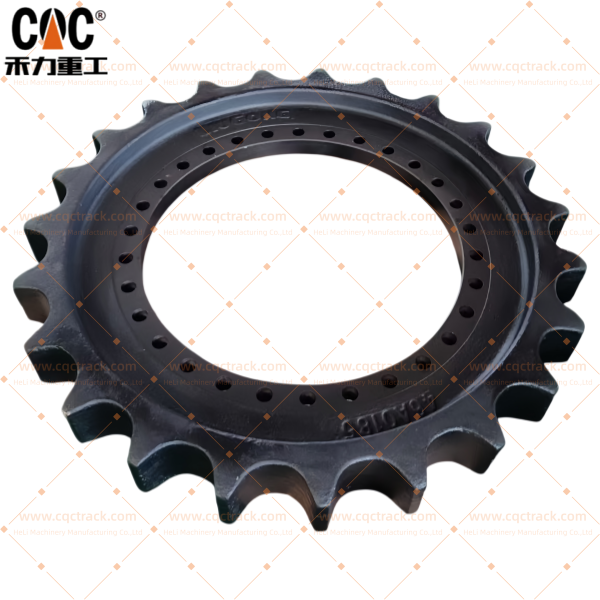
1. Executive Summary: Engineering the Power Transmission Interface for Large-Class Excavators
The final drive sprocket wheel assembly represents the culminating power transmission element in a crawler excavator’s undercarriage system. For the LIUGONG CLG970 and CLG975 excavators—machines operating in heavy civil construction, quarrying, and mining applications—the sprocket designated as Part Number46A0185 constitutes the critical interface between the machine’s final drive motor and its track chain . This assembly is responsible for converting high-torque rotational force into linear track movement, thereby propelling the excavator under extreme operational loads exceeding 70 metric tons of operating weight.
HELI Machinery Manufacturing Co., Ltd., operating under the CQCTRACK brand, manufactures this critical component using vertically integrated processes that encompass material sourcing, closed-die forging, precision CNC machining, controlled heat treatment, and comprehensive quality validation. This document provides a comprehensive technical exposition of the LIUGONG 46A0185 Track Sprocket Wheel Assembly, detailing the engineering philosophy, material science, manufacturing protocols, and quality assurance frameworks that distinguish these components from conventional aftermarket alternatives.
2. Product Identification and Cross-Reference Matrix
Accurate component identification is essential for procurement and maintenance operations. The following matrix establishes the interrelationship between the various reference numbers and their application context.
| Specification Parameter | Details |
|---|---|
| OEM Reference Number | 46A0185 |
| Component Type | Track Sprocket Wheel Assembly / Final Drive Sprocket Group |
| Primary Application | LIUGONG CLG970, LIUGONG CLG975 Crawler Excavators |
| Functional Classification | Final Drive Power Transmission Element |
| Manufacturing Origin | HELI Machinery Manufacturing Co., Ltd. (CQCTRACK) – Specialized heavy-duty undercarriage component manufacturer |
| Engineering Grade | Severe-Duty Mining/Construction Grade |
3. Functional Role in the Undercarriage System
Understanding the operational function of the sprocket assembly is essential for appreciating the engineering decisions that govern its design, material selection, and manufacturing processes.
3.1 Primary Operational Functions
Within the track chassis architecture of the LIUGONG CLG970 and CLG975 excavators, the sprocket wheel assembly performs three critical functions that collectively determine machine mobility and undercarriage system integrity:
1. Power Transmission:
The sprocket serves as the final torque conversion point in the drivetrain. It engages with the track chain bushings to convert rotational torque from the hydraulic final drive motor into linear tractive force. This power transmission must be smooth and continuous to prevent shock loading that can damage both the final drive and the undercarriage structure .
2. Track Chain Engagement:
The sprocket’s tooth profile is geometrically calibrated to synchronize perfectly with the pitch and contour of the CLG970/CLG975 track chain bushings. This precision meshing ensures:
- Smooth power transfer without vibration
- Minimized wear on both sprocket teeth and track chain bushings
- Reduced noise generation during operation
- Prevention of track slippage under high torque demands
3. System Synchronization:
The sprocket operates in concert with the idler, track rollers, and carrier rollers to maintain proper track tension and alignment. When all undercarriage components are within their wear limits and correctly synchronized, the track system delivers optimal traction efficiency and extended component life.
3.2 System Integration Context
The sprocket assembly interfaces with the following components to form an integrated wear system:
| Interface Component | Functional Relationship |
|---|---|
| Final Drive Motor | Mounts to the final drive hub via precision-machined bolt pattern; transmits torque through splined connection or keyed shaft |
| Track Chain Assembly | Sprocket teeth engage with track bushings; tooth profile must match chain pitch precisely |
| Track Frame | Provides structural mounting and alignment reference |
| Seal System | Interfaces with final drive sealing surfaces to retain lubricant and exclude contaminants |
4. Technical Deconstruction: The Anatomy of the 46A0185 Sprocket Assembly
The performance of a sprocket in heavy-duty applications is determined by the synergistic integration of its constituent subsystems. The following deconstruction details the engineering specifications implemented in the HELI CQCTRACK manufacturing process.
4.1 Material Metallurgy: Foundation of Durability
The selection of base material is the first and most critical determinant of sprocket performance. HELI CQCTRACK employs a rigorous material selection protocol based on application duty cycle and machine class.
Base Material Specification:
- Grade: 42CrMo4 / SAE 4140 high-strength chromium-molybdenum alloy steel or equivalent
- Material Characteristics:
- Excellent hardenability enabling deep, uniform case hardness
- High tensile strength for resistance to plastic deformation
- Good toughness at elevated temperatures
- Superior fatigue resistance under cyclic loading
Material Validation:
Every material batch undergoes spectrographic analysis to verify chemical composition against certified specifications. This ensures batch-to-batch consistency and full traceability throughout the production process .
4.2 Forging Process: Grain Flow Optimization
The transition from raw material to sprocket blank occurs through closed-die forging—a process that fundamentally enhances the component’s mechanical properties.
| Forging Parameter | Specification | Engineering Significance |
|---|---|---|
| Method | Closed-die hot forging | Refines grain structure; eliminates porosity |
| Grain Flow | Optimized to follow tooth contour | Enhances fatigue strength at stress concentration points |
| Material Yield | Controlled to minimize waste | Reduces internal voids and inclusions |
| Alternative Comparison | Forged vs. Cast | Forged sprockets exhibit superior impact resistance and fatigue life |
The forging process aligns the metallic grain flow with the component’s geometric contour, creating an anisotropic structure with superior impact strength compared to cast alternatives. This is particularly critical for the CLG970/CLG975 class, where impact loads from excavation and dozing operations can create severe stress concentrations at the tooth root.
4.3 Precision CNC Machining: Dimensional Accuracy
The forged blank undergoes multi-axis CNC machining to achieve the precise geometry required for proper fit and function.
Critical Machined Features:
| Feature | Tolerance Requirement | Function |
|---|---|---|
| Tooth Profile | AGMA Class 9 or equivalent | Ensures proper engagement with track chain bushings |
| Pitch Diameter | ±0.3 mm | Maintains correct chain-to-sprocket fit |
| Bore Diameter | IT7-IT8 tolerance class | Ensures concentric mounting to final drive |
| Mounting Bolt Pattern | ±0.1 mm positional accuracy | Prevents eccentric loading and seal damage |
| Sealing Surfaces | Ra 0.8 μm finish | Critical for lubricant retention and contaminant exclusion |
The tooth profile is machined to the exact involute form specified by the original equipment design, ensuring smooth engagement with the track chain and eliminating undue stress concentrations that accelerate wear .
4.4 Heat Treatment and Surface Engineering
Heat treatment is the core of the durability advantage offered by HELI CQCTRACK sprockets. The process creates a graduated hardness profile that maximizes wear resistance while maintaining core toughness.
Induction Hardening Protocol:
| Parameter | Specification |
|---|---|
| Surface Hardness (Teeth) | 58–62 HRC |
| Case Depth | 3–5 mm effective depth |
| Core Hardness | 28–32 HRC |
| Hardness Gradient | Gradual transition from case to core |
Technical Rationale:
- The hardened surface (58-62 HRC) provides extreme abrasion resistance against track bushing contact and abrasive contaminants
- The deep case depth (3-5 mm) ensures retained hardness throughout the usable wear life of the sprocket
- The ductile core (28-32 HRC) absorbs impact loads and prevents catastrophic tooth fracture
Alternative Hardening Methods:
- Carburizing: Carbon diffusion followed by quenching creates a hard case with tough core
- Through-Hardening: Not recommended for sprockets as it sacrifices impact resistance
- Induction Hardening: Preferred method for localized hardening of tooth surfaces only
4.5 Surface Protection and Corrosion Resistance
For components exposed to harsh operating environments, surface protection extends service life and maintains sealing integrity.
| Surface Treatment | Application | Benefit |
|---|---|---|
| Hard Chrome Plating | Seal running surfaces | Minimizes friction; prevents corrosion-induced seal damage |
| Zinc-Nickel Alloy Plating | Non-contact surfaces | Provides corrosion protection; 15 μm minimum thickness |
| Optional Hardfacing | Tooth contact surfaces | Deposits ultra-wear-resistant alloy for extended life in abrasive conditions |
5. Sealing System Integration
The interface between the sprocket assembly and the final drive is a critical sealing zone. Contamination ingress through this interface is a primary cause of final drive failure.
5.1 Sealing Surface Engineering
The sprocket incorporates precisely machined sealing grooves and surfaces designed to interface with multi-labyrinth or Duo-Cone-type seal systems:
- Surface Finish: Ground to Ra 0.8 μm or better on seal-running surfaces
- Hard Chrome Plating: Applied to seal contact zones to prevent corrosion-induced surface degradation
- Geometric Accuracy: Runout tolerance ≤0.05 mm TIR ensures uniform seal compression
5.2 Contamination Exclusion Philosophy
The sealing system serves two essential functions:
- Lubricant Retention: Prevents loss of final drive gear oil
- Contaminant Exclusion: Blocks entry of abrasive particles (silica, pulverized ore, slurry) that cause internal component failure
HELI CQCTRACK components are engineered with sealing surfaces that meet or exceed OEM specifications, ensuring proper interface with the machine’s existing seal system .
6. Manufacturing Capabilities: HELI CQCTRACK as a Source Manufacturer
HELI Machinery Manufacturing Co., Ltd. (CQCTRACK) operates as a vertically integrated manufacturer, distinguishing itself from parts distributors and trading companies through direct control over the entire production value chain.
6.1 Vertical Integration Architecture
| Production Stage | In-House Capability |
|---|---|
| Material Sourcing | Direct procurement from certified steel mills; spectrochemical analysis verification |
| Forging | Closed-die forging with controlled grain flow optimization |
| Machining | Multi-axis CNC turning and gear hobbing with micron-level precision |
| Heat Treatment | Computer-controlled induction hardening and carburizing furnaces; digital process logging |
| Surface Finishing | In-house plating and coating capabilities |
| Assembly | Clean-room assembly with torque-controlled fastening |
| Testing | Comprehensive dimensional, hardness, and NDT validation |
6.2 Quality Assurance Framework
The CQCTRACK quality system incorporates mandatory inspection gates that ensure batch-to-batch consistency and full traceability:
Incoming Material Validation:
- Spectrographic chemical analysis against certified specifications
- Ultrasonic testing per ASTM A388 for internal flaw detection
- Hardness verification and grain structure examination
In-Process Controls:
- 100% dimensional inspection of critical features using Coordinate Measuring Machines (CMM)
- Real-time monitoring of heat treatment parameters with digital record retention
- Magnetic particle inspection for surface and sub-surface defects
Final Assembly Validation:
- Hardness mapping: minimum 9-point verification per tooth
- Dynamic balancing: G6.3 at operating speed
- Run-in testing under load to verify smooth operation
Traceability Systems:
- Material certificates per EN 10204 3.1
- Digital retention of heat treatment logs and inspection reports
- Production lot traceability for root cause analysis
7. Technical Specifications Summary
| Specification | Detail |
|---|---|
| Component Type | Final Drive Sprocket Wheel Assembly |
| OEM Reference | 46A0185 |
| Compatible Equipment | LIUGONG CLG970, LIUGONG CLG975 |
| Material | 42CrMo4 / SAE 4140 forged alloy steel |
| Forging Method | Closed-die hot forging with grain flow optimization |
| Tooth Profile | ISO 606-B standard involute profile |
| Surface Hardness | 58–62 HRC |
| Case Depth | 3–5 mm effective depth |
| Core Hardness | 28–32 HRC |
| Sealing Surfaces | Hard chrome plated; Ra 0.8 μm finish |
| Corrosion Protection | Zinc-nickel alloy plating, 15 μm |
| Manufacturer | HELI Machinery Manufacturing Co., Ltd. (CQCTRACK) |
8. Value Proposition for Equipment Operations
8.1 Economic Rationale for Source Manufacturer Selection
| Factor | OEM Sourcing | Generic Aftermarket | HELI CQCTRACK |
|---|---|---|---|
| Cost Structure | Premium pricing with distributor markup | Variable; often lower initial cost | Competitive direct manufacturer pricing |
| Quality Control | High, but often no direct traceability | Inconsistent; supply chain variable | Vertically integrated with full traceability |
| Material Validation | OEM-specified only | Variable | Spectrographic analysis; ultrasonic testing |
| Supply Chain Stability | Subject to OEM production schedules | Variable sourcing | Direct manufacturer control with predictable lead times |
| Technical Support | Limited to distributor network | Typically none | Direct engineering access for failure analysis |
8.2 Total Cost of Ownership Considerations
For CLG970/CLG975-class machines operating at significant annual hours, the total cost of ownership advantages include:
- Extended service intervals through superior wear resistance
- Prevention of collateral damage to track chains and final drives
- Reduced unplanned downtime from sprocket failure
- Predictable wear cycles enabling scheduled maintenance
- Warranty validation through documented traceability
9. Maintenance and Replacement Strategy
9.1 Inspection Protocol
Regular inspection of the sprocket assembly enables predictive maintenance:
| Inspection Point | Criteria |
|---|---|
| Tooth Profile Deformation | Monitor for “hooking” or asymmetric wear patterns |
| Tooth Base Condition | Check for cracks at the tooth root |
| Seal Condition | Verify no lubricant leakage past seals |
| Mounting Bolts | Confirm torque retention; inspect for loosening |
| Flange Runout | Measure for eccentric wear indicating misalignment |
9.2 Replacement Strategy Recommendations
| Consideration | Recommendation |
|---|---|
| System Synchronization | Replace sprocket simultaneously with track chain to prevent mismatched wear patterns |
| Complete Undercarriage Assessment | Evaluate all components (rollers, idler, chain) during replacement planning |
| Installation Specifications | Adhere to specified torque values; ensure sealing surfaces are clean |
| Warranty Documentation | Maintain installation records and original packaging for traceability |
9.3 Failure Mode Prevention
Common failure modes addressed through engineering design:
| Failure Mode | Root Cause | Design Mitigation |
|---|---|---|
| Tooth Root Cracking | Cyclic bending stress | Grain flow optimization; ductile core material |
| Abrasive Wear | Contamination; friction | Deep case hardness (58-62 HRC) |
| Premature Seal Failure | Surface imperfections | Precision ground; hard chrome plated sealing surfaces |
| Mounting Failure | Bolt loosening; misalignment | Precision bolt pattern; runout tolerance control |
10. Conclusion: Engineering Confidence for Heavy-Duty Excavator Operations
The LIUGONG 46A0185 Track Sprocket Wheel Assembly for CLG970 and CLG975 excavators, as manufactured by HELI Machinery Manufacturing Co., Ltd. (CQCTRACK), represents a convergence of advanced material science, precision manufacturing, and application-specific engineering. Developed for the rigorous demands of heavy civil construction, quarrying, and mining operations, these assemblies incorporate:
- Forged steel construction with controlled grain flow for superior impact resistance
- Deep-case induction hardening providing extended wear life through differential hardness profiles
- Precision-machined tooth geometry ensuring perfect engagement with track chain bushings
- Advanced sealing surfaces engineered to maintain final drive integrity
- Vertically integrated manufacturing ensuring full traceability and batch-to-batch consistency
- Certified quality systems providing documented validation of materials, processes, and final assembly
For fleet managers, maintenance engineers, and procurement specialists responsible for maximizing the availability and cost-effectiveness of LIUGONG CLG970 and CLG975 excavators, sourcing these sprocket assemblies from a specialized manufacturer offers a demonstrable path to optimized total cost of ownership, reduced unplanned downtime, and enhanced operational safety.
References
- HELI Machinery Manufacturing Co., Ltd. “LIUGONG 46A0374 CLG9125 Final Drive Sprocket Wheel Assembly.” CQCTRACK Product Documentation, 2025.
- HELI Machinery Manufacturing Co., Ltd. “LIUGONG 46A0372 CLG965 Sprocket Wheel AS/Final Drive Sprocket Group.” CQCTRACK Technical Data Sheet, 2025.
- HELI Machinery Manufacturing Co., Ltd. “LIUGONG 46A0140 CLG920 CLG922 Track Sprocket Assy.” CQCTRACK Product Documentation, 2025.
Disclaimer: LIUGONG, CLG970, CLG975, and part number 46A0185 are trademarks and property of LiuGong Machinery Co., Ltd. HELI Machinery Manufacturing Co., Ltd. (CQCTRACK) is an independent manufacturer specializing in the production of premium replacement undercarriage components. Products are engineered to be mechanically interchangeable with the named OEM parts. This document is for informational purposes and does not imply affiliation, endorsement, or sponsorship by LiuGong.
Products categories
-

LIUGONG 46A0140 CLG920 CLG922 Track Sprocket As...
-

CLG-46A01240 final drive sprocket/ OEM manufact...
-

Hitachi Crawler Excavator Sprocket/1018740 Zax...
-

Liebherr 5601879 5601510 9389372 R974B R974C R9...
-

Caterpillar excavator E345 E349 (1243296 / 1792...
-
Excavator PC75 Sprocket Made in Italy sprocket


